Author: Corey Hines

  • Starbird Chicken: Driving 6X SMS Growth and 70% In-Store Kiosk Adoption Through Integrated Technology

    Starbird Chicken: Driving 6X SMS Growth and 70% In-Store Kiosk Adoption Through Integrated Technology

    Overview

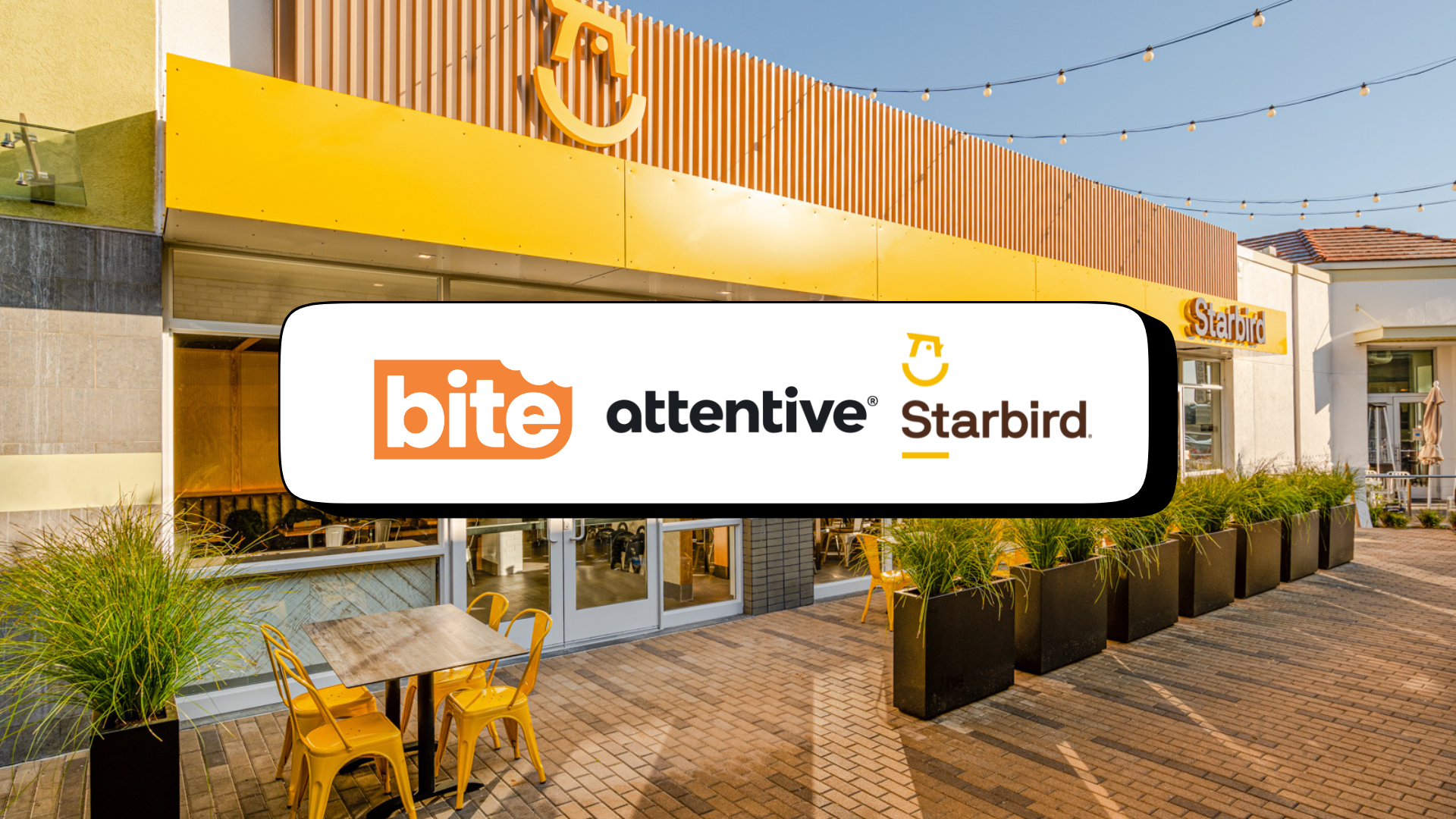
    Starbird is a tech-forward quick-service restaurant brand specializing in premium chicken offerings paired with global flavors. Founded in Silicon Valley, Starbird has built a reputation as a trailblazer in restaurant technology, with locations spanning the Bay Area and Southern California. The brand has consistently embraced innovation to enhance the guest experience while driving operational efficiency and sales growth.

    Business Name: Starbird Chicken

    Interviewee: Casey Hilder, Director of Marketing

    No. of Locations: 17 

    No. of Bite Kiosks: Deployed in 100% of locations

    The Challenge

    Before implementing their integrated kiosk and SMS strategy, Starbird faced several challenges:

    Customer Retention & Communication: As text messaging became increasingly common in the restaurant industry, guests were being inundated with messages, making it difficult to maintain an engaged subscriber base and communicate effectively with customers.

    Meet the Guest Wherever They Are: Traditional SMS opt-in methods, such as website pop-ups and wheel spinners, helped build their list, but Starbird aimed to go further by capturing the attention of their most engaged audience—guests visiting in-store.

    Operational Efficiency: As a growing brand committed to staying at the forefront of restaurant technology, Starbird needed solutions that could scale across locations while improving both the customer experience and operational metrics.

    The Solution

    Starbird partnered with both Bite and Attentive to create a seamless, integrated approach to customer engagement:

    Bite Kiosks: Starting with a pilot program in 2019, Starbird deployed Bite’s kiosk solution across their restaurant footprint. When COVID-19 hit six months after the initial pilot, they accelerated the rollout, placing kiosks outside restaurants as a contactless ordering solution. Today, Starbird operates 3-4 kiosks in each of their 15 locations and is designing new restaurants with kiosks as a primary ordering method.

    Attentive SMS Integration: Starbird integrated Attentive’s SMS and email platform directly with their Bite kiosks, creating a frictionless opt-in experience. The key to their success was implementing an opt-in process at the kiosk, where guests simply check a clearly marked box during their kiosk ordering experience to join Starbird’s SMS program.

    Strategic Segmentation: Beyond collecting opt-ins, Starbird leverages kiosk data to segment its SMS campaigns by market (e.g., LA versus the Bay Area), enabling it to deliver hyper-relevant promotions and communications to specific geographic audiences.

    The Results

    The integration of Bite kiosks and Attentive SMS has delivered exceptional results across multiple metrics:

    Explosive SMS Growth: Starbird grew their SMS subscriber list 6X in just six months following the kiosk integration. They now have over 108,000 SMS opt-ins from kiosks out of a total of 136,000 subscribers—meaning nearly 80% of their SMS audience has opted in via in-store kiosk.

    Industry-Leading Kiosk Adoption: 60-70% of in-store orders are now placed through Bite kiosks, demonstrating strong customer acceptance and preference for the self-service experience. The kiosks have consistently driven improvements in average check size and customer retention metrics.

    Campaign Performance: SMS campaigns targeted to kiosk-acquired subscribers have significantly outperformed previous efforts. A recent “Salad Monday” promotion in the LA market achieved:

    • Nearly 50,000 message deliveries
    • 6.5% click-through rate
    • The highest success rate ever seen for this recurring promotion

    “The most success we’ve ever seen from that promotion was the first time we had used SMS since the integration happened,” noted Casey Hilder, Director of Marketing at Starbird. “Integrating Bite’s kiosk technology with Attentive has been a game-changer for us. It’s allowed us to build a stronger connection with our customers, delivering timely, personalized messages that enhance their experience and keep them engaged with the Starbird brand.”


    About Bite

    Bite is the leading kiosk ordering software trusted by fast-casual, quick-serve restaurants and convenience stores. With our patented Artificial Intelligence technology, Bite Lift, we revolutionize the customer experience by analyzing each transaction in real-time and providing upsell recommendations that consistently yield an impressive 20% increase in check averages.

    Our software is designed to be highly customizable, allowing brands to effortlessly tailor the design to align with their unique identity. It is user-friendly, making it easy to manage, and can be quickly deployed to enhance operational efficiency. By seamlessly integrating into existing tech stacks, Bite ensures improved order accuracy, higher average check sizes, increased throughput, and enhanced customer satisfaction for our valued clients. To learn more, visit us at getbite.com.


    About Attentive

    Attentive® is the AI-powered mobile marketing platform transforming the way brands personalize consumer engagement. Attentive enables marketers to craft tailored journeys for every subscriber, driving higher recurring revenue and maximizing campaign performance. Activating real-time data from multiple channels and advanced AI, the platform personalizes content, tone, and timing to help brands deliver 1:1 messages that truly resonate.

    With a top-rated customer success team recognized on G2, Attentive partners with marketers to provide strategic guidance and optimize SMS and email campaigns. Trusted by leading global restaurant brands like Blaze Pizza, Jason’s Deli, and Luna Grill, Attentive ensures enterprise-grade compliance and deliverability, supporting trillions of interactions across more than 70 industries. To learn more or request a demo, visit www.attentive.com or follow us on LinkedIn, X (formerly Twitter), or Instagram.

  • Fast Casual’s Tech Advantage: Why Smaller Formats Are Winning with Digital Ordering

    Fast Casual’s Tech Advantage: Why Smaller Formats Are Winning with Digital Ordering

    Key Data Points:


    Fast casual restaurants occupy a sweet spot in the dining landscape—offering higher quality than traditional quick-service without the wait times and price points of full-service establishments. But maintaining this delicate balance at scale requires sophisticated operational capabilities that would have been impossible just a few years ago.

    Technology has become the great enabler of the fast casual format, allowing smaller operations to deliver experiences that feel premium while maintaining the speed and efficiency that modern consumers demand. The result? Fast casual is rapidly taking market share from both traditional QSR and casual dining, powered by digital ordering platforms that transform how restaurants operate.

    The Fast Casual Value Proposition

    The appeal of fast casual dining is straightforward: customers want quality food, reasonable prices, and the ability to get in and out quickly without sacrificing atmosphere or customization. It’s a demanding combination that challenges traditional operational models.

    Full-service restaurants offer quality and ambiance but require table service, longer wait times, and higher prices to cover increased labor costs. Traditional QSRs deliver speed and value but often compromise on ingredient quality, customization, and dining environment. Fast casual promises the best of both worlds—and technology makes it possible to deliver on that promise consistently.

    Recent moves by fast casual leaders signal their ambition to capture even more market share. Cava’s renewed focus on warmer, more comfortable restaurant interiors through its “Project Soul” initiative shows that the fast casual chain is determined to take share from casual dining, not just compete with other quick-service concepts. They’re betting that with the right combination of quality, speed, technology, and atmosphere, they can give customers everything they want without the traditional trade-offs.

    Multi-Channel Ordering as Core Strategy

    Frank Paci, CEO of Newk’s Eatery, articulates the modern fast casual approach perfectly: “We continue to try to meet the guests where they want to (and) how they want to access the brand. So as a result obviously we’ve continued to invest in third party delivery. We’ve got online ordering. We’ve got kiosks in store. You can order table side in our stores.”

    This isn’t about having multiple ordering options for the sake of novelty—it’s about operational flexibility and customer choice becoming fundamental to the business model. Different customers have different preferences, and even the same customer might prefer different ordering methods depending on the situation.

    In-Store Kiosks

    Self-service kiosks excel during lunch rushes when speed matters most. Customers can walk in, place their order immediately without waiting in line, customize their meal precisely, and pay in under two minutes. The kiosk handles the transaction while kitchen staff focus entirely on food preparation, creating clear separation between order-taking and order-making that improves both speed and quality.

    For fast casual concepts with extensive customization options like Original ChopShop—build-your-own bowls, sandwiches with dozens of ingredient choices, complex salad combinations—kiosks provide the perfect interface. Customers can explore options visually, take their time making selections, and see exactly what they’re ordering without the rushed feeling of holding up a line.

    Mobile and Online Ordering

    The ability to order ahead transforms the fast casual experience. Customers can browse menus during a brief work break, place orders from their office, and arrive at the restaurant to pick up food that’s ready and waiting. This convenience factor has become table stakes in fast casual, and the brands executing it well see dramatic increases in order frequency.

    Mobile ordering also generates invaluable data about customer preferences, peak ordering times, and popular menu combinations. This intelligence allows operators to optimize staffing, ingredient prep, and menu offerings based on actual behavior rather than assumptions.

    Third-Party Delivery Integration

    While delivery adds complexity and commission costs, it also expands the addressable market beyond whoever happens to be within walking or driving distance during meal times. For fast casual brands, delivery isn’t just about convenience—it’s about creating occasions to eat their food that wouldn’t otherwise exist.

    The challenge is integrating delivery orders seamlessly into kitchen operations without disrupting the experience for dine-in and pickup customers. Sophisticated restaurant format trends show that winners manage multiple order channels as a unified operation rather than treating each channel as a separate business.

    Tableside Ordering

    Some fast casual concepts are experimenting with tableside ordering via QR codes or tablets, allowing customers to sit down first and then browse the menu and order at their leisure. This approach combines the relaxed atmosphere of full-service dining with the efficiency of self-service technology, creating yet another way to customize the experience for different customer preferences.

    Technology as a Quality Differentiator

    Here’s where fast casual technology creates genuine competitive advantage: when implemented thoughtfully, digital ordering doesn’t just make operations more efficient—it makes the food better.

    Consider the typical lunch rush at a restaurant with only counter ordering. Staff scramble to take orders while also coordinating with the kitchen, managing the register, and handling customer questions. The kitchen receives a flood of tickets all at once, making it difficult to maintain consistent quality when everything needs to be prepared simultaneously.

    Restaurant customers using digital kiosks to place orders

    Now contrast that with a digitally-enabled operation. Orders flow in through multiple channels but arrive at the kitchen in a steady, manageable stream. The kitchen display system organizes tickets logically, showing prep times and flagging items that need immediate attention. Staff aren’t pulled away from food prep to handle order-taking duties. The result is more consistent quality, better accuracy, and the ability to handle higher volume without quality degradation.

    This operational excellence becomes a brand differentiator. Customers notice when their customized order is prepared exactly right, when their pickup order is ready precisely when promised, and when the lunch rush doesn’t compromise food quality. These aren’t minor details—they’re the core experiences that drive repeat visits and positive word-of-mouth.

    The Integration Challenge

    The fast casual brands winning with digital ordering platforms solve this through unified systems that integrate seamlessly across all channels. The key is ensuring each component of your technology stack works together rather than creating silos.

    Platforms like Bite exemplify this integration-first approach. While Bite’s kiosk software specializes in the in-store ordering experience, it’s designed to integrate seamlessly with existing restaurant technology infrastructure—connecting with POS systems and loyalty platforms to ensure data flows smoothly across your operation. This integration capability is crucial because it allows restaurants to add best-in-class kiosk functionality without disrupting their existing technology stack or forcing them to replace systems that already work well.

    The power of proper integration extends beyond just connecting systems. When kiosk software like Bite integrates with your POS and loyalty platforms, it creates a complete view of customer preferences and ordering behavior. This data becomes invaluable for making informed decisions about menu optimization, pricing strategies, promotional timing, and operational improvements. Restaurants can see which items perform best at kiosks versus counter ordering, identify upsell opportunities that resonate with customers, and understand how loyalty members interact with self-service technology differently than casual guests.

    A customer at Buona ordering at the kiosk

    This matters enormously for fast casual operators managing multiple ordering channels. When your kiosk platform integrates properly with core systems, staff see:

    • Consistent order information regardless of how customers place their orders.
    • Inventory tracking remains accurate. Customer loyalty data stays synchronized.
    • Menu updates made in your POS automatically reflect at kiosks.
    • The operation runs smoothly because your technology supports your workflow rather than fighting against it.

    For restaurants using separate systems for mobile ordering and third-party delivery alongside in-store kiosks, the integration capability becomes even more critical. By ensuring your kiosk software works harmoniously with your existing POS and loyalty infrastructure, you create a foundation that supports whatever additional ordering channels you choose to offer. This flexibility allows you to meet customers wherever they want to order—whether that’s at a kiosk, through your mobile app, via delivery platforms, or at the traditional counter—while maintaining operational coherence behind the scenes.

    The Smaller Format Advantage

    Interestingly, fast casual’s typically smaller physical footprint becomes an advantage in the digital ordering era. These restaurants don’t need extensive dining rooms when significant order volume comes through pickup, delivery, and takeout channels. This allows for premium locations in high-traffic areas where rent would be prohibitive for larger formats.

    The economics work beautifully: digital ordering drives higher throughput through smaller spaces, reducing rent costs per transaction while maintaining or improving the customer experience. Technology allows fast casual concepts to generate full-service level revenue from quick-service sized locations.

    Beyond Efficiency to Hospitality

    The most sophisticated fast casual operators understand that technology’s ultimate purpose isn’t just efficiency—it’s enabling genuine hospitality at scale. When routine transactions happen digitally, staff have bandwidth to make eye contact, offer recommendations, check on dining customers, and create moments of connection that turn first-time visitors into regulars.

    This is the paradox that fast casual has cracked: more technology enables more humanity. The kiosk handles the transaction so the employee can focus on hospitality. The mobile app manages the order so the kitchen can focus on quality. The integrated systems handle coordination so everyone can focus on their craft.

    While other restaurants install in-store ordering kiosks, chains like Cava are prioritizing face-to-face interaction, recognizing that technology should enhance rather than replace the human element in dining.

    The Future Is Already Here

    Fast casual’s success with digital ordering isn’t speculative—it’s happening now. The brands posting double-digit growth aren’t doing so despite investing in technology, but because of it. They’ve recognized that the format’s inherent advantages only fully emerge when supported by digital ordering platforms that make operational complexity invisible to customers.

    For restaurants still approaching technology as an afterthought or treating each digital channel as a separate initiative, the lesson is clear: true omnichannel capability, where every ordering method integrates seamlessly into unified operations, has become the competitive baseline in fast casual. The question isn’t whether to build this capability, but how quickly you can get there before competitors capture the market share you’re leaving on the table.

  • Original ChopShop Sees Dramatic Check Increase & Loyalty Penetration After Implementing Bite Kiosks

    Original ChopShop Sees Dramatic Check Increase & Loyalty Penetration After Implementing Bite Kiosks

    Overview of the Business

    Original ChopShop is a fast-casual neighborhood dining chain specializing in feel-good, customizable meals for everybody. The company operates over two dozen locations serving protein bowls, salads, sandwiches, juices, protein shakes, superfruit bowls, breakfast items, and other nutritious options with extensive customization possibilities, using high-quality, whole ingredients.

    ChopShop’s menu features numerous add-on options, including premium vegetables, proteins, and specialty items, creating a complex ordering environment that requires careful optimization to maximize both customer satisfaction and revenue potential.

    Business Name: Original ChopShop

    Interviewee: Paul Marrero, Director of Information Technology at Original ChopShop 

    No. of Locations: 27 

    No. of Bite Kiosks: Deployed in 100% of locations

    Results Date Range: January – July 2025

    The Challenge

    The inside of Original ChopShop location

    Before implementing kiosks, ChopShop faced barriers to maximizing order value and customer engagement.

    • Customer hesitation at the register prevented guests from customizing orders they actually wanted, limiting add-on sales and creating negative experiences when facing human cashiers.
    • Hidden menu discovery issues meant specialty items like premium vegetables went largely undiscovered, while loyalty program enrollment, buried at checkout, resulted in low penetration rates.
    • Operational bottlenecks during peak periods, as staff struggled to present all customization options effectively, created rushed customer decisions and limited visibility into preferences for menu optimization.

    “When a customer is with a person at a register, they can feel intimidated to customize their order. When they’re at the kiosk, they feel a lot more comfortable making the modifications they might actually want.”

    The Solution

    Original ChopShop kiosks

    Original ChopShop partnered with Bite to implement comprehensive self-service kiosks across all of its locations. Important factors included:

    • Strategic technology deployment with intuitive digital menu presentation, loyalty program integration that urged more signups, and text-to-account conversion for seamless digital engagement.
    • Optimized placement and flow design that forced guest interaction through proper kiosk positioning while maintaining human register options to accommodate all customer preferences.
    • Structured change management approach including dedicated kiosk ambassadors during rollout, hybrid support roles, and a month-long guest training period to promote kiosk adoption.

    “For the first few weeks, we manned a person at the kiosk. That way, we could guide the guests through the ordering process. That was actually really critical to driving kiosk adoption.”

    The Results

    Screenshots of the Bite software for Original ChopShop

    After completing deployment across all locations and allowing for customer adoption, Original ChopShop achieved remarkable results:

    • 15% average check increase driven entirely by add-on sales with no base price changes, including dramatic improvements in menu items that were previously hidden or rarely ordered.
    • Strong customer engagement metrics with 30-40% loyalty program penetration and 65-70% text-to-account conversion rates by prompting guests to sign up for loyalty at the beginning of the ordering process.
    • Operational excellence and adoption success with a 95% customer acceptance rate after implementing kiosk ambassadors to guide guests through the ordering process, as well as optimized kiosk placement that forced guest interaction.

    The implementation proved that removing psychological barriers to customization could unlock significant revenue potential while simultaneously improving the customer experience. ChopShop’s success demonstrates the power of thoughtful technology implementation combined with strategic change management and customer-centric design.

  • The QSR Survival Playbook: 7 Game-Changing Strategies to Win in Today’s Market

    The QSR Survival Playbook: 7 Game-Changing Strategies to Win in Today’s Market

    The QSR industry is at a breaking point. With only 14% of consumers still viewing fast food as budget-friendly and labor shortages forcing 48% of operators to reduce hours, the traditional QSR playbook is quickly becoming obsolete. But here’s what the hardliners miss: the brands that adapt now will dominate the next decade.

    This isn’t about tweaking your value menu or running another BOGO promotion. It’s about fundamental transformation. The winners this year and beyond will be those who embrace radical efficiency through automation and technology, create irresistible customer experiences through data, and build operational models that thrive despite economic headwinds.

    1. Deploy Kiosks as Revenue-Generating Machines

    Kiosks aren’t just a labor-saving tool. The data reveals that kiosk orders generate up to 30% higher average tickets than counter orders.

    The math is compelling: Research shows that 63% of operators saw higher check sizes specifically attributed to upsell prompts built into self-ordering kiosk software.

    The Kiosk Profit Formula:

    • Position kiosks prominently near entrances and high-traffic pathways to capture greater adoption
    • Partner with companies like Bite, which design intuitive and user-friendly interfaces that naturally guide customers toward premium options
    • Implement upselling prompts that highlight add-ons and upgrades, leveraging visual menus that make premium items stand out
    • Use data from kiosk orders to identify your most effective upsell combinations and optimize menus based on popular items
    • Integrate kiosks with loyalty programs and mobile apps for seamless omnichannel experiences

    Don’t make the mistake of viewing kiosks as standalone devices. The biggest ROI comes from higher average checks, personalized upsells, loyalty tie-ins, and more efficient order flow.

    2. Turn Ghost Kitchens Into Your Expansion Engine

    While competitors struggle with real estate costs, other operators are scaling through ghost kitchens, which offer a big cost advantage. Startup costs range from just $30,000 to $100,000, compared to hundreds of thousands or even millions for traditional restaurants. CloudKitchens, for example, enables establishments to start cooking in as few as 8 weeks with as little as $30,000 initial investment.

    Your Ghost Kitchen Game Plan:

    • Test new concepts without the risk of full buildouts
    • Use ghost kitchens as staging areas for new locations, speeding up construction
    • Operate multiple virtual brands from the same kitchen space
    • Focus solely on delivery without front-end investments in dine-in facilities, benefiting from smaller footprints, lower rentals, and improved efficiency through shared resources
    • Partner with established platforms that handle logistics, cleaning, and maintenance

    The most sophisticated operators are running hybrid models—maintaining their flagship locations while using ghost kitchens to penetrate new markets and test menu innovations with minimal risk.

    3. Make AI Voice Ordering Your 24/7 Sales Machine

    Labor shortages aren’t temporary. The restaurant industry has 1.4 million job openings with turnover approaching 75%. One solution lies in AI voice ordering that’s always clocked in.

    Drive-thrus account for as much as 70% of sales at many brands, making even incremental improvements financially significant. Early adopters are seeing game-changing results: For example, Vox AI’s deployments demonstrate ROI increases of up to 17 times, with shorter drive-thru queues, enhanced upselling, and higher customer satisfaction.

    Voice AI Implementation Strategy:

    • Deploy systems that handle orders 24/7 in multiple languages
    • Focus on truly autonomous AI that requires no human intervention during operation
    • Implement systems that make more context-specific upsell attempts than human employees
    • Ensure seamless integration with existing POS and kitchen systems
    • Use AI for both drive-thru and phone ordering (if available) to maximize coverage

    The technology is mature and scaling rapidly. Companies like ConverseNow, Kea, and SoundHound AI are all competing for market share, driving innovation and reducing costs.

    4. Leverage Data for Hyper-Personalization

    Generic marketing is dead. Brands running 200 experiments monthly gain insights that would take traditional marketers years to uncover, with successful personalization delivering 20-30% improvements in conversion.

    The opportunity is massive: QSRs using AI-powered predictive analytics for personalized marketing see double-digit lifts in click-through rates and average ticket increases that flow directly to the bottom line.

    Your Data Domination Playbook:

    • Centralize data from POS systems, mobile apps, and delivery platforms into a unified platform for complete customer visibility
    • Use predictive analytics to anticipate demand and optimize inventory
    • Test creative variations at scale—one QSR evaluated 320 variations in 18 days, achieving a 22% increase in customer acquisition at 31% lower cost
    • Create location-specific profiles to understand local preferences and behaviors
    • Leverage AI to deliver personalized offers that drive higher open rates and millions in incremental revenue

    Remember: Those who are nailing personalization are growing 40% faster than their counterparts

    5. Automate Everything That Doesn’t Require a Smile

    Beyond front-of-house automation, the real efficiency gains come from comprehensive back-of-house transformation. The global robot kitchen market is projected to reach $9.6 billion by 2033, growing from $2.7 billion in 2023.

    Automation Priority List:

    • Online ordering systems that integrate directly with POS and kitchen displays, eliminating manual order entry
    • Robotic kitchen systems for grilling, frying, and plating
    • AI-powered workforce optimization that balances employee availability with demand, reducing labor costs while improving efficiency
    • Automated inventory management with predictive ordering
    • Labor management software that handles scheduling, time tracking, recruiting, and payroll

    The key is strategic implementation. Start with your most time-consuming, repetitive tasks to see immediate efficiency gains, then expand systematically.

    6. Rethink Your Menu as a Profit Engine

    With nearly 1 in 4 consumers now viewing fast food as a “treat” or “reward”, your menu strategy must evolve beyond basic value plays.

    The Profit-Maximizing Menu Framework:

    • Create a barbell strategy: rock-bottom value items paired with premium, high-margin options
    • Add unique twists to familiar favorites. For example, when chains introduce premium items like wagyu or truffle fries, 30% of consumers express excitement, jumping to 42% among parents
    • Use data to identify and eliminate low-performing items
    • During labor shortages, analyze menu items to identify the most popular dishes and purge slow-moving ones, particularly those requiring multiple cooking steps
    • Design limited-time offers that create urgency without cannibalizing core items

    Your menu should tell a story that resonates with both value-seekers and experience-chasers. 

    7. Build Loyalty Programs That Drive Behavior

    Traditional points-based programs are table stakes. Modern loyalty requires sophistication. 80% of QSR operators say traditional loyalty isn’t working for their brand.

    Next-Generation Loyalty Tactics:

    • Use personalized offers based on purchasing history and real-time behavior
    • Implement subscription models for frequent customers (unlimited drinks, meal bundles)
    • Integrate gamification and real-time rewards to keep customers engaged
    • Create exclusive experiences and early access to new items for top-tier members
    • Use integrated platforms that combine loyalty with ordering data to optimize staffing and maintain service standards

    The best programs create emotional connections beyond transactions. Think community, not just coupons.

    The Bottom Line

    The QSR industry is undergoing its most significant transformation since the invention of the drive-thru. Economic pressures, labor challenges, and evolving consumer expectations are forcing a complete reimagining of the business model.

    But within this disruption lies unprecedented opportunity. Brands willing to embrace automation & technology, personalization, and new operational models aren’t just surviving—they’re positioning themselves to capture market share from their competitors.

    The question isn’t whether to transform, but how quickly you can execute. Every day you delay is a day your competitors pull further ahead. The playbook is clear, the technology is proven, and the market rewards for early movers are substantial. 

  • Labor Shortage or Labor Evolution? How 68% of QSRs Are Redeploying Staff with Kiosk Technology

    Labor Shortage or Labor Evolution? How 68% of QSRs Are Redeploying Staff with Kiosk Technology

    The narrative around restaurant automation often paints a dystopian picture: robots replacing workers, technology eliminating jobs, and the slow death of human interaction in dining. But something very different is happening on the ground at restaurants across the country.

    Rather than replacing workers wholesale, forward-thinking QSR operators are discovering that kiosk technology allows them to redeploy existing staff into roles that create more value for customers and more satisfaction for employees. It’s not a labor shortage—it’s a labor evolution.

    Key Data Points:

    The Staffing Crisis Is Real

    The numbers paint a stark picture of the restaurant labor shortage. Currently, 70% of restaurant operators report having job openings that are tough to fill, while 45% say they don’t have enough employees to support existing customer demand. This isn’t a temporary blip—it’s the new operational reality.

    The situation worsened in early 2025. Bars and eateries lost a net 25,500 jobs in Q1 2025, marking the lowest quarterly performance since late 2020. Meanwhile, more than 74% of operators expect wages to increase in 2025, adding additional pressure to already thin margins.

    For restaurants trying to deliver excellent service while managing rising costs and persistent staffing challenges, the traditional model simply isn’t working anymore. Something has to change.

    Technology as a Strategic Response

    Faced with these challenges, 65% of operators are adopting new technologies like self-service kiosks, AI-powered drive-thrus, and labor-management systems. But the most successful implementations aren’t about cutting headcount—they’re about reimagining how restaurants deploy their most valuable asset: human employees.

    The key insight driving this shift is simple: not all tasks require human judgment, personality, and problem-solving skills. Taking routine orders at a counter is important work, but it doesn’t leverage the unique capabilities that human employees bring to restaurants. When technology handles these transactional tasks, people can focus on work that genuinely requires a human touch.

    The Redeployment Revolution

    Innovative restaurant operators are rethinking their entire service model around this principle. Iwona Alter, COO of The Habit Burger Grill, describes how they’re testing host positions where employees act as concierges for customers: “definitely a lot more texture and intimacy as to how the hospitality can happen in the restaurants today.”

    This isn’t just feel-good rhetoric—it’s a fundamental reimagining of QSR staffing solutions. Instead of standing behind a counter processing routine orders as quickly as possible, employees can:

    The Kiosk Ambassador Role That Provides Personalized Assistance

    Some customers need help navigating menus, understanding options, or accommodating dietary restrictions. Others have questions about ingredients or want recommendations. When self-service kiosks handle straightforward orders, staff become available to provide this high-touch assistance to customers who need it most. At Bite, we call this role “Kiosk Ambassador.” It’s a simple way to redeploy your existing staff to drive kiosk adoption.

    This creates a better experience for everyone. Tech-savvy customers who prefer to order independently can do so without waiting in line, while customers who value personal interaction receive more attentive service than they would in a traditional counter-order model.

    Focus on Food Quality and Presentation

    One of the most common redeployments involves moving staff from front-of-house order-taking to back-of-house food preparation and quality control. Additional hands in the kitchen mean faster ticket times, more consistent food quality, and better ability to handle customization requests accurately.

    This operational shift addresses one of the biggest complaints customers have about fast-casual dining: inconsistent execution. When your team isn’t stretched thin trying to simultaneously take orders and prepare food during rush periods, quality improves across the board.

    Enhance Cleanliness and Atmosphere

    Restaurant cleanliness has always mattered, but post-pandemic, customer expectations around sanitation have intensified. Redeploying staff to focus on maintaining dining areas, cleaning tables quickly between customers, and ensuring bathrooms stay pristine creates visible value that customers notice and appreciate.

    Similarly, having staff available to check on dining customers, refill drinks, or address issues promptly transforms the dining experience in ways that drive repeat visits and positive reviews.

    Manage Complex Situations

    Technology excels at handling routine transactions, but it can’t manage the unexpected situations that arise daily in restaurants. Upset customers, incorrect orders, equipment malfunctions, and unique requests all require human judgment and empathy.

    When routine orders run through kiosks, staff have the bandwidth to address these situations properly rather than rushing through them while worrying about the growing line at the counter.

    The Employee Experience Improves Too

    Restaurant automation often triggers concerns about job satisfaction and employee morale, but the reality of thoughtful kiosk implementation is often the opposite. Many employees prefer roles that involve more customer interaction, problem-solving, and variety over the monotony of taking orders during eight-hour shifts.

    Front-line restaurant workers consistently report that the most stressful part of their job is managing the pressure during peak periods when lines extend out the door and every customer interaction feels rushed. Kiosks alleviate this pressure by distributing the order-taking workload, creating a calmer work environment where employees can focus on doing their jobs well rather than just doing them fast.

    This improved work experience has tangible benefits for operators struggling with turnover. When jobs become more engaging and less stressful, retention improves—reducing the costs and disruptions associated with constantly recruiting and training new staff.

    Doing More with the Staff You Have

    Perhaps the most compelling argument for kiosk adoption in the current labor market is simple: you can serve more customers with your existing team. When bottlenecks at the counter disappear, throughput increases without adding headcount.

    Technology like Bite’s kiosk platform allows restaurants to handle peak-period volume that would otherwise require additional cashiers. During lunch rush, instead of customers waiting in a single line for multiple cashiers, they can immediately access any available kiosk and complete their order in a fraction of the time.

    This increased throughput doesn’t just mean happier customers—it means more revenue generated by the same number of employees. In an industry where labor costs are rising and finding qualified workers remains difficult, this operational efficiency becomes a crucial competitive advantage.

    The Strategic Shift

    The restaurants thriving despite the labor shortage share a common approach: they view restaurant automation not as a replacement for human workers, but as a tool that amplifies what their existing team can accomplish.

    This requires letting go of traditional assumptions about restaurant staffing. The optimal QSR operation in 2025 doesn’t look like the optimal operation from 2015. Customer expectations have evolved, technology capabilities have advanced, and labor market realities have fundamentally changed.

    Forward-thinking operators are embracing this evolution. They’re eliminating the bottlenecks that frustrated customers and stressed employees. They’re creating new roles that leverage human strengths rather than fighting against human limitations. And they’re building more resilient operations that can deliver excellent service even when perfect staffing remains elusive.

    Beyond the Binary Choice

    The conversation around restaurant technology too often presents a false choice: either embrace automation and lose the human element, or resist technology and struggle with operational challenges. The operators successfully navigating today’s labor market reject this binary thinking.

    They recognize that self-service kiosks and human hospitality aren’t opposing forces—they’re complementary elements of modern service delivery. Technology handles what technology does best, freeing humans to do what humans do best.

    The result is restaurants that run more efficiently, employees who find their work more rewarding, and customers who receive better service across every interaction. That’s not a labor shortage being managed—it’s a labor evolution being embraced.

    In a market where 68% of QSRs are already redeploying staff through technology, the question isn’t whether to adopt this approach. It’s whether you’ll lead this evolution or struggle to catch up while competitors pull ahead.

  • From 10% to 30%: The Real Revenue Impact of Restaurant Kiosks

    From 10% to 30%: The Real Revenue Impact of Restaurant Kiosks

    When most restaurant operators consider self-service kiosks, they focus on the obvious benefits: faster service, reduced labor costs, and shorter lines. But there’s a less visible advantage that’s transforming bottom lines across the industry—one that many operators don’t fully appreciate until they see it in their own numbers. Restaurant customers who interact with self-service kiosks typically purchase 10% to 30% more than those who order from cashiers. This isn’t a minor uptick or a statistical anomaly. It’s a fundamental shift in purchasing behavior that directly impacts restaurant kiosk ROI and transforms the economics of quick-service operations.

    Key Data Points:

    The Numbers Don’t Lie

    The data supporting higher average order value through kiosk ordering is remarkably consistent across different restaurant formats and geographies. Ticket sizes average 12% to 20% higher when customers order from self-service kiosks rather than cashiers, with some restaurants reporting increases as high as 30%.

    These aren’t just theoretical projections—they’re real-world results from thousands of restaurant locations. In one particularly compelling case, a QSR chain found that kiosk-linked loyalty scans boosted spend per order by 21% while simultaneously increasing overall loyalty engagement by 31%. That’s the kind of dual benefit that drives meaningful business transformation.

    Industry-wide surveys reinforce these findings. Research shows that 82% of operators reported a positive impact on service speed after implementing kiosks, while 63% saw higher check sizes specifically attributed to upsell prompts built into the ordering interface.

    Why Kiosks Drive Higher Spending

    The revenue impact of restaurant kiosks isn’t magical—it’s psychological. Several factors combine to create an environment where customers naturally spend more:

    The Removal of Social Pressure

    When ordering from a human cashier, customers often feel subtle pressure to make quick decisions and keep the line moving. This rushed environment doesn’t encourage browsing, customization, or consideration of add-ons. There’s also a social hesitation around asking for modifications or adding multiple extras that might seem indulgent.

    Self-service restaurant kiosks eliminate this pressure entirely. Customers can take their time exploring menu options, reading descriptions, and considering upgrades without worrying about holding up other guests or being judged by staff. This relaxed decision-making environment consistently leads to larger orders.

    Strategic Visual Presentation

    Kiosks present menu items with high-quality images, detailed descriptions, and logical organization that makes the entire menu more discoverable. Items that might get overlooked during a verbal exchange with a cashier become visible and appealing on a digital interface.

    The visual nature of kiosk ordering also makes add-ons and upgrades more tangible. When customers can see exactly what an extra topping or premium ingredient looks like, they’re more likely to add it to their order.

    Intelligent Upselling at the Right Moment

    Perhaps the most powerful aspect of upselling technology is timing. Well-designed kiosk software knows exactly when to suggest relevant additions to an order. After a customer selects an entrée, the system might highlight complementary sides. Before checkout, it can remind them about desserts or drinks.

    These prompts aren’t random—they’re data-driven suggestions based on what other customers typically order together. The recommendations feel helpful rather than pushy because they’re contextually relevant to what the customer has already selected. Bite’s AI-powered upsell technology, Bite Lift, is the best-in-class solution in the kiosk market. 

    Human cashiers, no matter how well-trained, can’t consistently deliver this level of personalized, perfectly-timed upselling during every transaction, especially during busy periods when speed becomes the priority.

    Customization Freedom

    Modern consumers love customization. They want their orders exactly how they like them, and kiosks make customization effortless. The ability to easily modify ingredients, adjust portion sizes, and build personalized meals encourages customers to create their ideal dish—often resulting in premium additions that increase the ticket size.

    This customization isn’t just about revenue. It also drives customer satisfaction. When people get exactly what they want, they’re more likely to return and become regular customers.

    The Loyalty Connection

    The integration of loyalty programs with kiosk ordering creates a powerful revenue multiplier. When customers scan their loyalty accounts at a kiosk, they’re not just earning points—they’re also receiving personalized recommendations based on their purchase history.

    This personalization drives both immediate revenue through targeted upsells and long-term revenue through increased engagement. The 31% boost in loyalty engagement that one QSR experienced isn’t just about more frequent visits—it’s about creating customers who have a deeper relationship with the brand and consistently spend more per visit.

    Maximizing Average Order Value Without Alienating Customers

    The key to successful kiosk upselling is balance. The most effective upselling technology doesn’t bombard customers with endless prompts or create friction in the ordering process. Instead, it makes strategic, relevant suggestions that genuinely enhance the customer’s meal.

    Modern kiosk platforms like Bite engineer their upselling features specifically to maximize average order value while maintaining a smooth, enjoyable user experience. The system might suggest a popular dessert, but it won’t delay the ordering process or force customers through multiple screens of add-ons they’re not interested in.

    This sophisticated approach respects the customer’s time and autonomy while still capturing revenue opportunities that would otherwise be missed. It’s why customers consistently report positive experiences with kiosk ordering, even as operators see dramatically higher ticket sizes.

    The Compounding Effect on Revenue

    When you combine a 12% to 30% increase in average order value with faster service that allows you to serve more customers during peak periods, the revenue impact compounds quickly. A restaurant that implements kiosks isn’t just making each transaction slightly more valuable—it’s fundamentally transforming its revenue potential.

    Consider a location serving 500 customers per day with an average ticket of $12. A conservative 15% increase in average order value adds $1.80 per transaction, or $900 per day. That’s $328,500 in additional annual revenue from a single location—and that’s before accounting for the ability to serve additional customers thanks to reduced wait times.

    Scale this across multiple locations, and the restaurant kiosk ROI becomes impossible to ignore.

    Beyond the Initial Investment

    The upfront cost of implementing self-service kiosks can seem substantial, but the revenue impact makes the payback period remarkably short. When ticket sizes increase by double-digit percentages while labor efficiency improves and customer satisfaction remains high, the return on investment isn’t just positive—it’s transformative.

    The restaurants capturing the 20% to 30% increases in average order value aren’t using standard, basic kiosk systems. They’re deploying intelligent platforms that understand customer psychology, leverage data effectively, and create genuinely better ordering experiences.

    In an industry where margins are notoriously thin and every percentage point matters, the 10% to 30% revenue lift from kiosk ordering isn’t just an interesting statistic—it’s a competitive necessity that separates market leaders from those struggling to keep pace.

  • Building a First-Party Ordering Ecosystem that Enhances Guest Experience, Grows CRM, and Strengthens Brand Connections

    Building a First-Party Ordering Ecosystem that Enhances Guest Experience, Grows CRM, and Strengthens Brand Connections

    This case study is in collaboration with unPLUG Dining, a next-generation guest engagement and ordering solution for restaurants.

    Overview

    California Fish Grill (CFG), an ambitious fast-casual seafood brand, partnered with Bite Kiosk and unPLUG (Web + App) to design a fully integrated first-party ordering ecosystem. The initiative focused on driving results through optimizing each digital interaction for on-premise and off-premise guests.

    For a brand whose nearly 80% of its revenue is digital, the goal was clear: create a seamless digital ordering journey that maximizes guest convenience, strengthens loyalty, and unlocks profitability through first-party channels.

    Challenge

    CFG faced three core challenges in its digital growth:

    Over-Reliance on Third-Party Platforms

    Third-party delivery platforms created brand disintermediation, reduced margins, and limited CRM growth.

    Fragmented Guest Data

    With guest transactions spread across web, mobile, and in-store channels, CFG lacked a unified view of customers, limiting personalization and communication.

    Guest Frequency and Mobile Growth Bottleneck

    The incumbent ordering system lacked rewards, engagement, and personalization, resulting in the brand struggling to increase guest frequency. This was most evident in the lack of growth for the mobile app.

    The Solution: First-Party Ordering Ecosystem

    Bite Kiosk Integration

    Self-service kiosks powered by Bite streamlined on-premise ordering while automatically capturing guest data into CFG’s CRM. This not only reduced line friction but also became a consistent source of CRM enrollment.

    unPLUG Web + App Experience

    unPLUG designed CFG’s iOS, Android, and Web ordering platforms to deliver a frictionless experience that emphasizes first-party ordering. Features included:

    • Deep-linking from web to app for a seamless handoff
    • Loyalty enrollment at checkout
    • Push, SMS, and email campaigns powered by CRM integration

    Unified CRM Growth

    By connecting kiosks, web, and app into a single CRM pipeline, CFG achieved holistic guest visibility. This enabled personalized communication, targeted campaigns, and scalable frequency drivers.

    California Fish Grill promotes free items digitally to redeem in the restaurant, in app, or online.

    Key Growth Mechanisms via First-Party Channels

    Driving Growth in Sales

    Consistent first-party channel adoption increased both on-premise and off-premise revenue.

    In-store and Online Loyalty

    The technology allowed guests to earn and redeem rewards in-store and online just by checking in with their phone number. Supercharging the adoption of the program

    Direct Customer Communication

    First-party platforms gave CFG control of messaging, allowing brand-authentic promotions and real-time communication with loyal guests.

    Reinforcing Mobile Growth

    For the most loyal percentile of guests, the app became a must. CFG has seen its mobile app revenue increase by nearly 60% in just 6 months.

    2025 YTD Results

    • Off-Premise Sales Growth (YoY): +13.89% → $1.5M revenue growth
    • On-Premise Kiosk Sales Growth (YoY): +7.26% → $2.1M revenue growth
    • Loyalty Sign-Ups: 157,152 new members → 50% frequency uplift among enrolled guests
    • CRM Growth: 100,000 new guests added through kiosk, web, and app

    Impact

    The partnership between CFG, Bite, and unPLUG created a flywheel effect:

    • More guests onboarded into loyalty through kiosks and digital ordering.
    • CRM growth enabled targeted campaigns that reinforced frequency.
    • Mobile adoption unlocked new channels for communication and repeat purchase.
    • First-party ordering reduced reliance on aggregators, delivering both margin expansion and brand ownership.
  • The $406 Billion Question: How QSRs Are Using Technology to Capture Market Growth

    The $406 Billion Question: How QSRs Are Using Technology to Capture Market Growth

    Key Data Points:

    The quick-service restaurant industry stands at an inflection point. Valued at $406.17 billion in 2024, the QSR market is projected to surge to $662.53 billion by 2029—a staggering 63% increase in just five years. But this growth isn’t being distributed evenly. Some brands are capturing outsized market share while others struggle to keep pace, and the difference increasingly comes down to one factor: technology investment.

    The question facing every QSR operator today isn’t whether to invest in restaurant technology, but rather which technologies will deliver the greatest competitive advantage in an increasingly crowded marketplace.

    The Winners Are Pulling Away

    Look at the performance numbers from recent quarters, and a clear pattern emerges. Fast casual chains like Wingstop saw sales jump nearly 21% year-over-year in Q3. Chipotle’s same-store sales rose 6% during the same period, while Cava posted an impressive 18% growth rate.

    These aren’t just good numbers—they’re exceptional in an industry where single-digit growth is typically considered strong performance. So what separates the winners from the rest of the pack?

    The answer lies in how these brands are leveraging technology to create better customer experiences, streamline operations, and adapt to rapidly changing consumer preferences. As Cava CEO Brett Schulman observes: “As the country gets more diverse, people’s palates are shifting, seeking bolder, more adventurous flavors, and at the same time, they’re more interested in health and wellness.”

    Meeting these evolving expectations requires more than just menu innovation. It demands operational excellence, and that’s where restaurant technology investment becomes the key differentiator.

    The Labor Cost Challenge

    One of the most pressing challenges facing QSRs today is the dramatic rise in labor costs. Since 2017, labor costs for full-service restaurants have grown by 73.9%, compared to a 60.2% increase for quick-service establishments. While QSRs have fared somewhat better, a 60% increase in labor costs over seven years still represents a significant pressure on margins.

    This labor cost trajectory isn’t reversing anytime soon. Minimum wage increases continue rolling out across developed countries, and competition for quality employees remains fierce. Traditional approaches to managing these costs—cutting staff hours or reducing service levels—often backfire by degrading the customer experience and driving guests to competitors.

    Forward-thinking QSRs are taking a different approach: strategic technology deployment that allows them to do more with their existing workforce while actually improving service quality. This isn’t about replacing human employees wholesale—it’s about using technology to handle routine transactions and tasks, freeing staff to focus on food quality, customer service, and the complex situations that truly require human judgment.

    Technology as the Great Differentiator

    The QSR brands capturing the most growth share several common characteristics in their approach to technology:

    Speed and Convenience

    Today’s customers expect fast service, but they also expect convenience and control. Self-service kiosks address both needs simultaneously, reducing order times while giving customers the ability to browse menus, customize orders, and check out at their own pace without feeling rushed by a line behind them.

    The impact on throughput is substantial. During peak hours, kiosks can handle multiple transactions simultaneously that would otherwise bottleneck at a single cashier station. This means serving more customers in the same time window without compromising the quality of any individual interaction.

    Higher Transaction Values

    QSR market trends clearly show that growing revenue isn’t just about serving more customers—it’s about increasing the value of each transaction. Technology enables this in ways that feel natural to customers rather than pushy.

    Digital kiosks excel at strategic upselling. They can suggest complementary items, highlight limited-time offers, and present upgrade options at exactly the right moment in the ordering journey. These suggestions don’t feel like high-pressure sales tactics because customers maintain complete control over their final order.

    The data backs this up: restaurants deploying modern self-service technology consistently report higher average check sizes compared to traditional counter ordering. The increase isn’t marginal—it’s significant enough to materially impact overall revenue.

    Better Customer Data

    Perhaps the most undervalued aspect of restaurant technology investment is the data it generates. Every digital interaction creates insights into customer preferences, popular menu items, peak ordering times, and opportunities for operational improvement.

    This data becomes a strategic asset. QSRs can use it to optimize menu offerings, adjust staffing levels, refine marketing campaigns, and personalize the customer experience. Brands that leverage this data effectively gain compound advantages over competitors still operating on intuition and anecdotal observations.

    Operational Efficiency

    Behind the scenes, integrated technology systems streamline everything from inventory management to staff scheduling. Modern point-of-sale systems communicate with kitchen display systems, supply chain management tools, and analytics platforms to create a seamlessly connected operation.

    This integration reduces errors, minimizes waste, and ensures that managers have real-time visibility into business performance. When problems arise, they can be identified and addressed immediately rather than discovered days later through manual reporting.

    Fast Casual Growth and the Technology Connection

    The explosive growth rates posted by fast casual chains aren’t coincidental. These brands have consistently been early adopters of restaurant technology, viewing digital transformation as a core strategic priority rather than a nice-to-have enhancement.

    Fast casual restaurants occupy a unique position in the market—they offer higher quality and customization than traditional fast food, but maintain the speed and convenience that customers expect from quick-service establishments. Executing this balance requires sophisticated operational systems that can handle complexity without sacrificing speed.

    Technology makes this possible. Self-service kiosks, for instance, can guide customers through extensive customization options without slowing down the ordering process. Kitchen display systems ensure that complex orders are prepared accurately. Mobile ordering and payment options give customers even more control over their experience.

    Capturing Growth in a Competitive Market

    As the QSR market races toward $662 billion, the brands that will capture the lion’s share of growth are those making smart technology investments today. This means:

    Choosing proven platforms: Not all restaurant technology delivers the same results. The best solutions combine intuitive user experiences with enterprise-grade reliability. Platforms like Bite’s kiosk software have demonstrated their ability to drive the outcomes that matter most—faster service, higher ticket sizes, and actionable customer insights.

    Integrating seamlessly: Technology shouldn’t create more operational complexity. The right solutions integrate with existing systems and workflows, enhancing what already works while fixing what doesn’t.

    Scaling efficiently: As brands grow, their technology needs to scale with them. Cloud-based platforms, standardized hardware deployments, and centralized management capabilities make it possible to maintain consistency across dozens or hundreds of locations.

    The Path Forward

    The $406 billion question isn’t really about market size—it’s about market share. With such substantial growth projected over the next five years, every QSR operator faces a choice: invest in the technology that will help capture a growing slice of an expanding pie, or risk falling behind competitors who are moving faster.

    The performance gap between technology leaders and laggards will only widen. Customers increasingly expect digital ordering options, personalized experiences, and frictionless service. Labor costs will continue rising, making operational efficiency more critical than ever. And the brands using technology to meet these challenges head-on will be the ones writing the next chapter of QSR market trends.

    The winners have already made their choice. The question is whether others will follow before the opportunity passes them by.

  • A West Coast Sandwich Chain Lowered Food Costs, Improved Order Accuracy & Increased Check Size with Kiosks

    A West Coast Sandwich Chain Lowered Food Costs, Improved Order Accuracy & Increased Check Size with Kiosks

    For nearly 50 years, a famous West Coast chain has served tasty, fresh sandwiches for customers in more than 200 locations across five states. The restaurants are known for delivering quality ingredients, generous portions, and bold flavors.

    The Challenge

    Recent increased consumer demand for convenience has put pressure on their leadership to reevaluate their traditional service model, resulting in the company’s embrace of technology to modernize the brand and make their business more accessible and efficient. To do so, self-service kiosks needed to be evaluated. When switching to a model that included self-service kiosks, the business needed to utilize software that was already integrated with their existing tech stack to ensure a seamless transition and avoid further complicating their operations.

    The Solution

    The restaurant chose Bite for its industry-leading kiosk software. The product is well-designed, scalable, and the system is stable. Bite’s technology leverages a unique machine-learning algorithm that learns from aggregate data. The algorithm provides guests with intelligent menu recommendations based on combinations of items that guests typically order.

    The Results

    • 37% of customers utilize the kiosks for ordering, resulting in higher average checks.
    • Kiosks lowered food costs, saving the restaurant thousands over the course of the year.
    • Implementing kiosks greatly improved order accuracy, eliminating unnecessary food waste.
    • The average check size increased versus cashier sales, positively impacting the chain’s bottom line.
    • With customer orders being placed via the kiosk, speed line efficiency was maximized.

    “In a lot of cases, the kiosk is really the
    customer’s first digital impression of our brand.
    It’s incredibly important to us that customers
    have a good personal experience when they
    first touch the kiosk, because it’s in that moment
    that they begin to build a relationship with the
    brand,” — VP of IT of West Coast Sandwich Chain

  • Why 76% of Restaurants Are Cutting Wait Times with Self-Service Kiosks in 2025

    Why 76% of Restaurants Are Cutting Wait Times with Self-Service Kiosks in 2025

    Key Data Points:

    The lunch rush at your favorite quick-service restaurant used to mean one thing: long lines and impatient customers checking their watches. But walk into most modern QSR locations today, and you’ll notice something different. Self-service kiosks have become the new front line, transforming how customers order and how restaurants operate.

    The numbers tell a compelling story. Recent research reveals that 76% of kiosk-enabled restaurants have successfully reduced wait times, addressing what has historically been one of the biggest pain points in fast casual and quick-service restaurant operations. As the industry continues to evolve, self-service kiosks aren’t just a trendy addition—they’re becoming essential infrastructure for competitive restaurants.

    The Economic Case for Kiosks Is Stronger Than Ever

    The global self-service kiosk market demonstrates just how rapidly this technology is being adopted. After reaching $34.4 billion in 2024, the market is projected to hit $37.2 billion this year, with a compound annual growth rate of 10.9% expected through 2030. These aren’t just vanity metrics—they reflect a fundamental shift in how restaurants are investing in their operations.

    Chris Allen, Research Director at RBR Data Services, puts it plainly: “With hospitality overheads continuing to skyrocket globally and minimum wage increases planned in many developed countries, restaurant chains of all sizes will introduce kiosks or expand existing rollouts as a way of rationalizing their operations and boosting transaction values.”

    But the story goes beyond simple cost reduction. Restaurants are discovering that self-service kiosks deliver measurable improvements across multiple operational metrics that directly impact both the bottom line and customer satisfaction.

    Three Key Benefits Driving Adoption

    Dramatically Reduced Wait Times

    The most immediate impact of self-service kiosks is speed. Research shows these systems reduce total order time by nearly 40%—a game-changing improvement during peak hours. When customers can walk up to available kiosks instead of waiting in a single queue, the entire flow of the restaurant improves.

    This isn’t just about moving people through faster. Reduced wait times mean happier customers, higher table turnover, and the ability to serve more guests during critical lunch and dinner rushes without adding square footage or expanding the physical footprint.

    Increased Check Sizes

    Perhaps surprisingly to some operators, 67% of restaurants with kiosks report increased check sizes. The reason is straightforward: digital interfaces are excellent at suggesting add-ons, upgrades, and complementary items without the social pressure that sometimes makes customers hesitate to customize their orders with human cashiers.

    Kiosks never forget to suggest dessert, never get too busy to mention limited-time offers, and present upsells in a visually appealing way that feels less like sales pressure and more like helpful suggestions. The result is more revenue per transaction without requiring additional labor.

    Improved Order Accuracy

    Order accuracy might be the most underrated benefit of self-service technology. With 69% of kiosk-enabled restaurants reporting improved accuracy, the impact extends beyond just getting orders right the first time. Fewer mistakes mean less food waste, fewer remakes, reduced customer service issues, and better overall guest experiences.

    When customers input their own orders, see visual confirmations of their selections, and can review everything before finalizing, the chances of miscommunication drop dramatically. No more misheard special requests or confusion about modifications.

    Why Restaurant Wait Times Matter More Than Ever

    In today’s competitive dining landscape, wait times have become a critical differentiator. Customers have more choices than ever, and they’re increasingly willing to take their business elsewhere if service feels too slow. Social media amplifies both positive and negative experiences, meaning a reputation for long lines can spread quickly.

    Self-service kiosks address this pain point while simultaneously freeing staff to focus on food preparation, quality control, and customer service for those who need assistance. The technology doesn’t replace human workers—it redeploys them to higher-value activities that genuinely require a human touch.

    Choosing the Right Kiosk Solution

    Not all self-service kiosks deliver the same results. The best solutions combine intuitive user interfaces that require minimal learning curve with enterprise-grade reliability that ensures consistent uptime during your busiest hours. Restaurant operators need QSR technology that integrates seamlessly with existing POS systems, supports their specific menu complexity, and provides the analytics to continuously optimize performance.

    Modern kiosk solutions like Bite are designed specifically to deliver the outcomes that matter most: reduced wait times, increased revenue per order, and improved accuracy. With proven results across thousands of restaurant locations, the right kiosk platform becomes a strategic asset rather than just another piece of hardware.

    The Future of Restaurant Operations

    As the data makes clear, self-service kiosks have moved from experimental technology to operational necessity. The 76% of restaurants seeing reduced wait times, the 67% enjoying larger check sizes, and the 69% experiencing better order accuracy aren’t outliers—they’re the new standard for forward-thinking operators.

    For restaurants still on the fence about adopting kiosk technology, the question isn’t whether to implement self-service ordering, but rather when and with which solution. The competitive advantages are too significant to ignore, and customers increasingly expect the option to order on their own terms.

    In 2025 and beyond, cutting wait times isn’t just about speed—it’s about building a restaurant operation that meets modern customer expectations while creating a more sustainable and profitable business model.