For a brand whose nearly 80% of its revenue is digital, the goal was clear: create a seamless digital ordering journey that maximizes guest convenience, strengthens loyalty, and unlocks profitability through first-party channels.
Challenge
CFG faced three core challenges in its digital growth:
Over-Reliance on Third-Party Platforms
Third-party delivery platforms created brand disintermediation, reduced margins, and limited CRM growth.
Fragmented Guest Data
With guest transactions spread across web, mobile, and in-store channels, CFG lacked a unified view of customers, limiting personalization and communication.
Guest Frequency and Mobile Growth Bottleneck
The incumbent ordering system lacked rewards, engagement, and personalization, resulting in the brand struggling to increase guest frequency. This was most evident in the lack of growth for the mobile app.
The Solution: First-Party Ordering Ecosystem
Bite Kiosk Integration
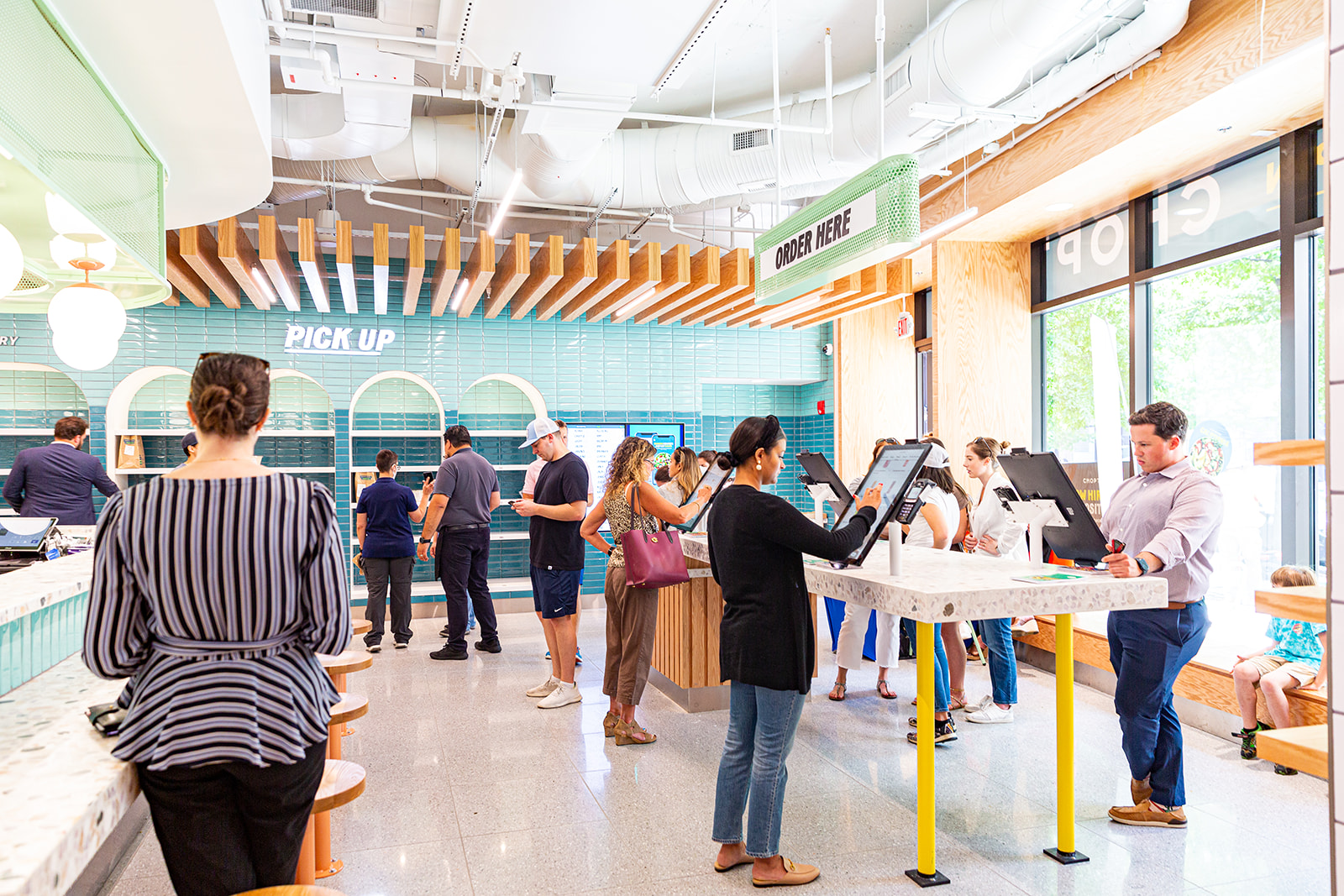
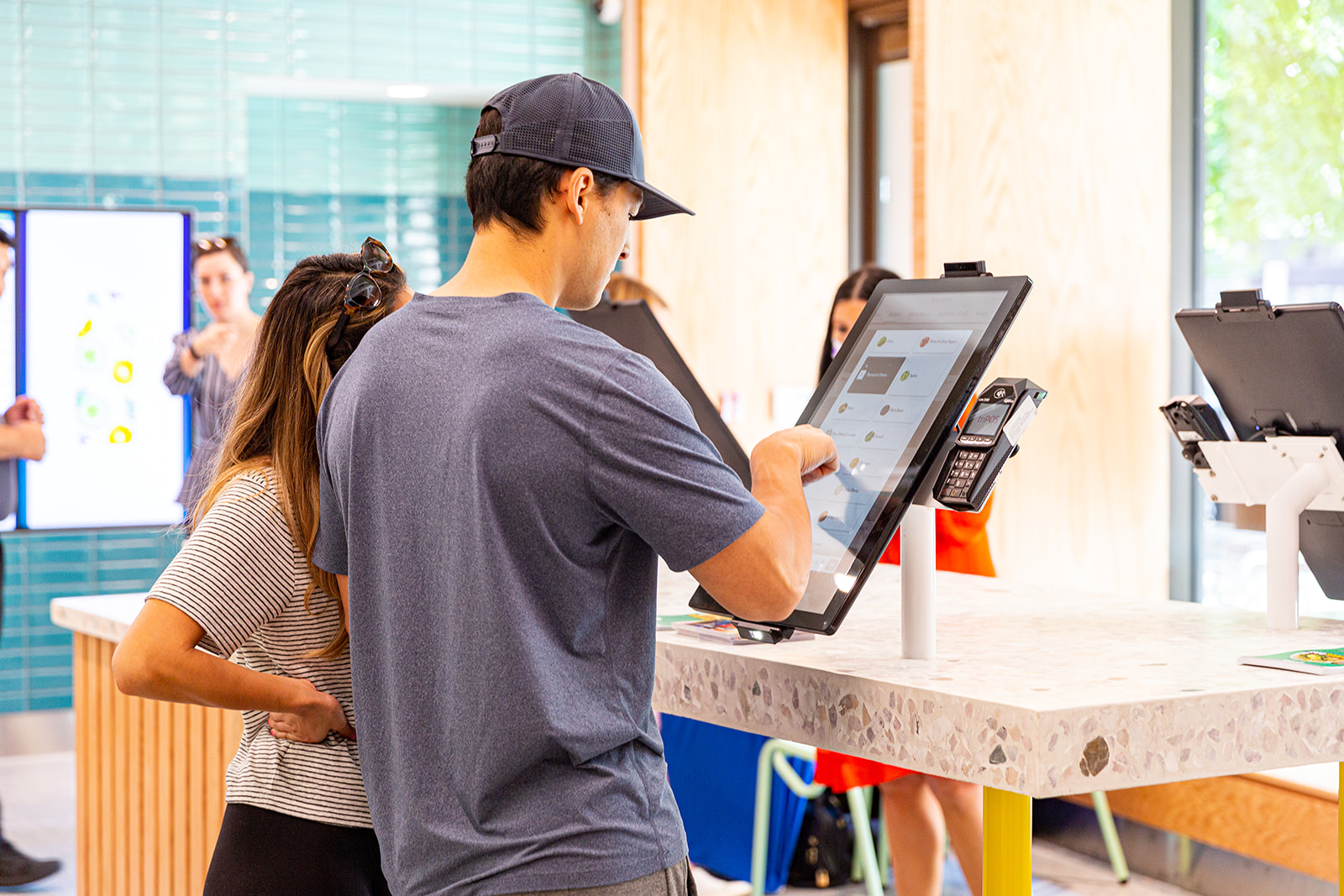
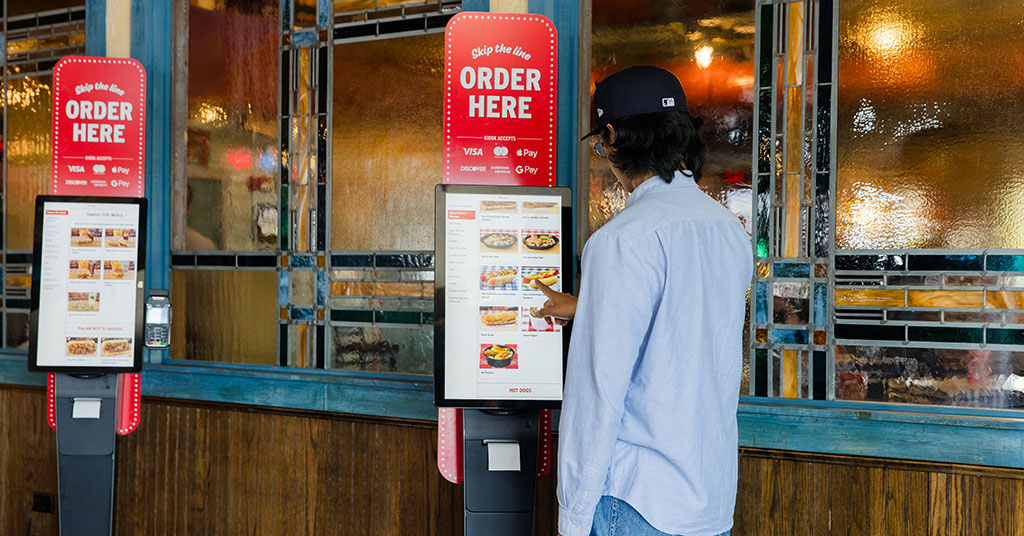
Self-service kiosks powered by Bite streamlined on-premise ordering while automatically capturing guest data into CFG’s CRM. This not only reduced line friction but also became a consistent source of CRM enrollment.
unPLUG Web + App Experience
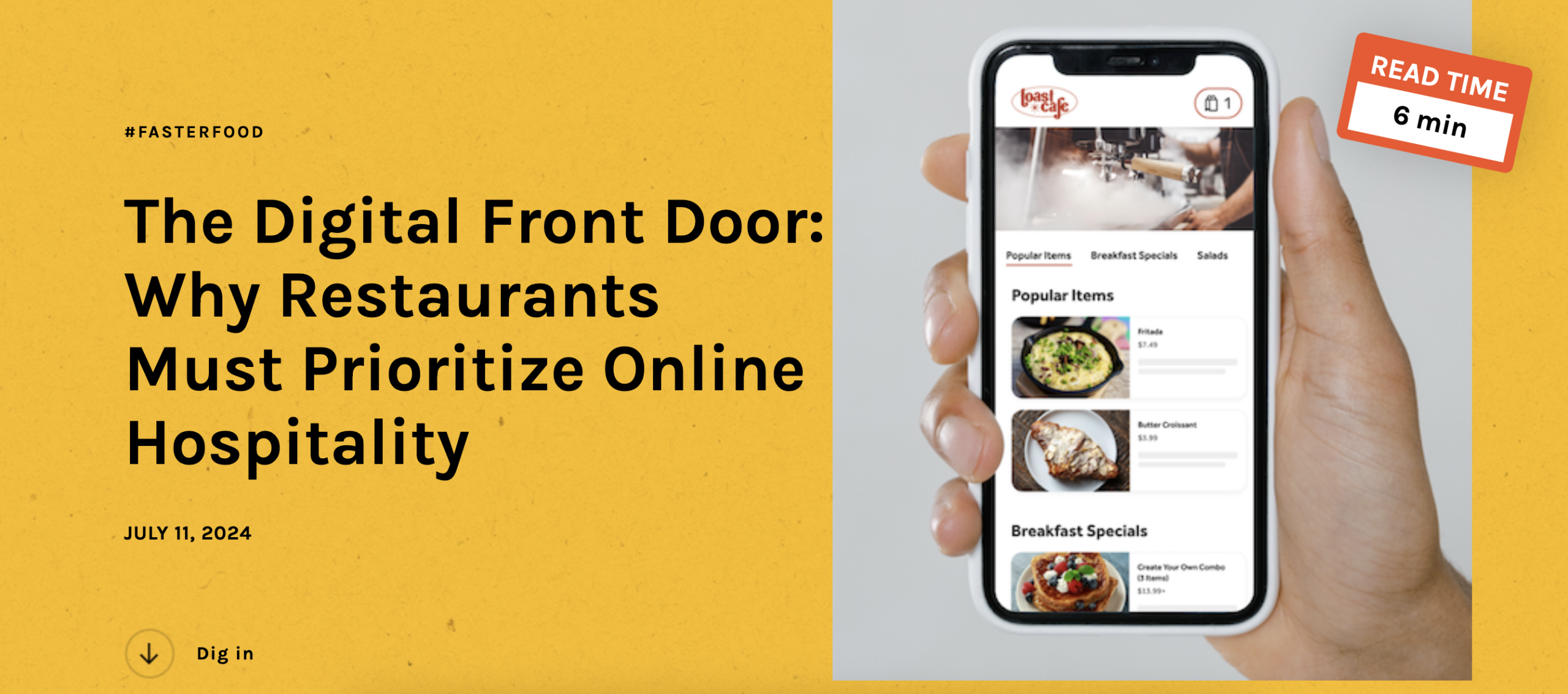
unPLUG designed CFG’s iOS, Android, and Web ordering platforms to deliver a frictionless experience that emphasizes first-party ordering. Features included:
Deep-linking from web to app for a seamless handoff
Loyalty enrollment at checkout
Push, SMS, and email campaigns powered by CRM integration
Unified CRM Growth
By connecting kiosks, web, and app into a single CRM pipeline, CFG achieved holistic guest visibility. This enabled personalized communication, targeted campaigns, and scalable frequency drivers.
California Fish Grill promotes free items digitally to redeem in the restaurant, in app, or online.
Key Growth Mechanisms via First-Party Channels
Driving Growth in Sales
Consistent first-party channel adoption increased both on-premise and off-premise revenue.
In-store and Online Loyalty
The technology allowed guests to earn and redeem rewards in-store and online just by checking in with their phone number. Supercharging the adoption of the program
Direct Customer Communication
First-party platforms gave CFG control of messaging, allowing brand-authentic promotions and real-time communication with loyal guests.
Reinforcing Mobile Growth
For the most loyal percentile of guests, the app became a must. CFG has seen its mobile app revenue increase by nearly 60% in just 6 months.
The following is a guest post from fellow HNGRY Trends member Brandon Barton, CEO of Bite and co-host of The Simmer podcast.
There are no shortage of restaurant tech companies. Despite trendsofconsolidation, there are more companies pitching ‘just-right solutions’ for the moment each year. The natural reaction to this abundance of choice is to recoil, reject it, and go with the easiest, laziest choice– an all-in-one solution. For some parts of the restaurant stack in certain segments, this works and might even be my recommendation. But in the name of hospitality, can we all agree that our guests deserve better than a cookie-cutter, “engineering side project” ordering experience? Hospitality is holistic. Now, more than ever, guests are evaluating your brand on your digital experience and I’m here to tell you that “all-in-one” stops at the guest experience.
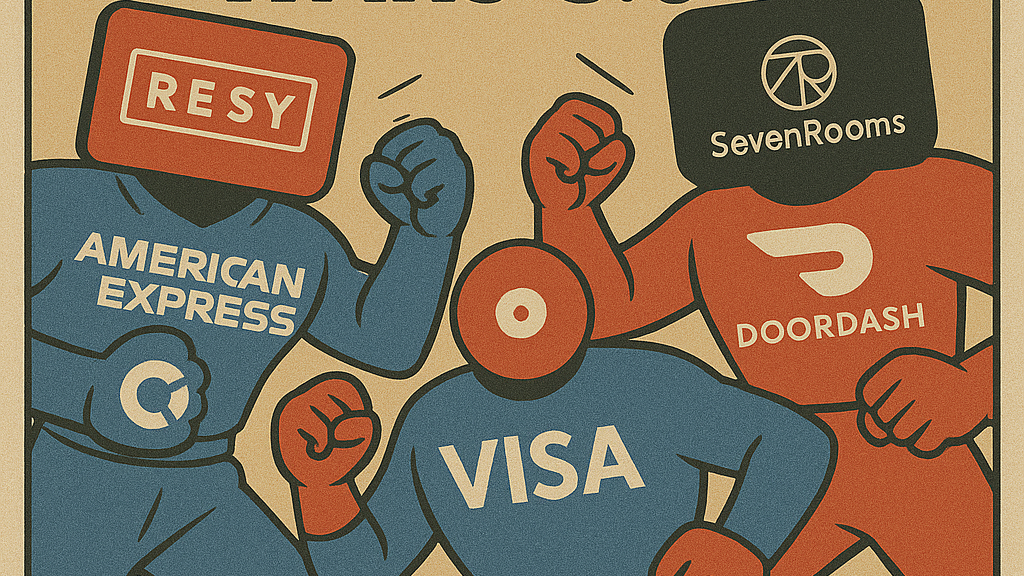
Get your popcorn out, Reservation Wars 3.0 is here. And on this go-around, nearly the whole restaurant tech ecosystem is involved. Below is an attempt to break it down and perhaps even make a few predictions of what happens next.
First up, let’s draw some lines in the sand. It’s easy to establish the primary foes: it’s Resy & Tock vs OpenTable vs SevenRooms. But the fun begins with all the partners, big and small, they’re bringing to the fight.
Each reservation platform has a credit card partner with varying depths of relationship. Let’s go into each:
One would think this is straightforward, and it kinda is — yet mosey over to the Chase Ultimate Rewards website and you’ll find Tock powering its Dining Experiences. I predict that we have just a few months, or even weeks, left to see those two partnered. Amex closed on its Tock deal in mid-October 2024, so we’re coming up on the one-year mark, and I’d bet that OpenTable has been chomping at the bit to take over offering, say, Sapphire cardholders’ reservations to Estela (which I went to recently and deserves no more than a walk-in bar visit for steak tartare and ricotta dumplings).
Tock powering Chase Ultimate rewards.
OpenTable is Deeply Partnered with Visa & Chase
What’s the counterbalance to Amex buying Resy? Visa and OT, obviously. Smart move by OpenTable to bring on a deep-pocketed credit card partner who has no love for Amex. In July 2024, OT launched the Visa Dining Collection, similar to Resy’s Global Dining Access, where cardholders can book tough-to-get reservations. Behind the scenes, Visa can help to support marketing dollars for OpenTable restaurants, often in exchange for some level of exclusivity to the OT/Visa alliance. While I have no interest in “who shot first”, Amex has a similar program using lump sums to keep Resy/Tock restaurants on their side (obscure ‘90s reference in honor of Jimmy Frischling and Han did). BTW, my pod with Kristen Hawley, called The Simmer, was a main character in the “paying restaurants for their reservations loyalty” accusations in 2024.
Not to complicate things (too late), but OT also has a partnership with Chase, billed as the Sapphire Reserve Exclusive Tables, launched April 2025. Again, “Exclusive Tables” at hot restaurants, yadda yadda yadda.
The entire Capital One Dining program is built on top of SevenRooms, a playbook that SevenRooms had with Amex and their concierge service before Resy stepped in. So far, it’s unclear how DoorDash’s buying of SevenRooms will affect this partnership, as DD has a tight relationship with Chase/Mastercard, offering DashPass memberships for free to eligible cards since 2020 (and announced in Aug 2024 that this will extend to 2027).
It will take a while, but I predict that Capital One gets squeezed out of the new SevenRooms / DoorDash partnership, just by virtue of being the C player in the credit card game. For now, showing that you have no reservations at 4 Charles Prime Rib for the foreseeable future, I guess, is cool!?! Also, at a much smaller scale, Capital One has, um, “assembled” (read: paid for) its own Signature Collection of restaurants.
Just another way to get rejected by 4 Charles.
So, to cover step one… it’s now:
Resy & Tock & Amex vs. OpenTable & Visa & Chase vs. SevenRooms & Capital One.
Let’s bring in the ordering platforms! And since there is no bigger player than DoorDash, we should start with them.
DoorDash Owns SevenRooms
DD closed on its acquisition of SevenRooms in July 2025. It only took a few months to get reservations live in the DoorDash app via the new “Going Out” feature. I hear DoorDash is out collecting its best-of-the-best restaurants and offering compensation for it. Same playbook, different benefactor.
It’s a given they will get some big-name restaurants away from OT/Resy/Tock. DoorDash can and will bundle its third-party delivery fees or Drive fees with its first-party products (ordering, reservations, pos, etc) to grow its footprint within any restaurant. For the QSR world (where I hear DoorDash is making huge inroads fast), the bundle is with first-party web ordering. For full service, the bundle will include some grip on the reservation book. The only question that remains is how much table inventory DD can force a restaurant to hold. My guess is they’ll come out with near 100% and when restaurants see cover declines, they’ll become less strict. Changing consumer behavior is hard, and the average DD user isn’t yet accustomed to opening the app when making reservations.
A week after the DoorDash acquisition of SevenRooms was announced, OT and Uber provided some details on their previously announced partnership. Not a coincidence. Kristen’s Expedite covered this perfectly here. At some future point, you’ll be able to book hot reservations in the Uber app and even use your OT points for an Uber. It’s not a stretch to see Uber doing what it takes to get the best restaurants in its app. Which means bags of money showing up at 275 Mulberry St. to pull them off Resy. People have been chattering about how Booking Holdings might/should spin out OT — would Uber be a buyer?
Resy & Tock & Toast
So when the music stopped, the Amex reservation arm was left without a delivery dance partner. There is, of course, Grubhub / Wonder / Seamless – but that’s not really a choice. Instead of taking on that baggage, Amex, somewhat predictably, went to the dominant full-service POS in the US, Toast. During the pandemic, and somewhat thereafter, Toast has leaned into more B2C opportunities with products like Local by Toast, a consumer app where one can order pickup or delivery. In the future, users of the Local App will see Resy and Tock reservations available. I can’t help but think this isn’t going to have a huge impact on restaurants. The reservations functionality in the Local app is buried (it gets the same treatment as “gift cards”), and I’m certain the user base is way smaller than all the other options.
So what’s the play here? Their press release leads with “personalized hospitality experiences,” which translates to the service team knowing more about your previous dining history to better serve you on this visit. In theory, beautiful. In practice, really hard to pull off. There is always this data issue with full-service restaurants – it’s hard to figure out which guests are sitting in which seats at a table and thus what they ordered. Reservation data captures one name, and the other people as essentially anonymous. Regardless of its usefulness, the top restaurants will (over)value this path towards greater hospitality.
Here’s where it gets fun: if the partnership has some exclusivity, whereas Toast won’t open this functionality to other reservation platforms, then it creates a virtuous lock-in for the overlap in their customer bases. If you leave Resy, you lose all that juicy POS data about your guests. Same if you switch POS. Also fun is the MONTH? announcement Toast has added Uber Direct as the default option for restaurants that use Toast’s first-party ordering. This is best viewed as a strategic step away from DoorDash, which is increasingly competing with Toast for first-party ordering and possibly POS. “But wait, aren’t Uber and OT partnered?” Yes. See: fun!
Superteam Updates:
Resy & Tock & Amex & Toast vs. OpenTable & Visa & Chase & Uber vs. SevenRooms & Capital One & DoorDash.
Can we call them T.A.R.T., V.O.U.Ch, and Do.C.S.?
This is becoming quite the Royal Rumble. And yet there are a few more companies that might be forced into the ring. For the most part, this has all been about the full-service segment of the industry. Yet DoorDash and Uber play a significant role in the QSR and Fast Casual segments, while Toast seems to be increasing its market share. Which leads to some strange bedfellows. Let’s quickly explore a few.
Where Does Olo Fit In?
The take-private of Olo from ThomaBravo, followed by the large layoff, are both signs that Olo is going to get active on the biz dev and corp dev fronts. They have up-and-coming competitors in their space (Deliverect, CheckMate, etc) trying to nip at their Rails business while the Toasts and DoorDash’s of the world are attacking their first-party ordering dominance. No one wants to fight a two-front battle. So if Olo gets involved here, I couldn’t see them pairing with TART or DOCS. With the natural alignment of Olo and Uber, VOUCH feels like the right pairing. OpenTable is also best suited for the largest full-service restaurant groups, many in Casual Dining, an industry segment where Olo has deep ties. What would be interesting is to try and make a guest data play here, similar to the Resy-Toast thing, but without involving the POS. Which works here because the goal is less about using data history to service a guest in the moment, as it is about marketing to that guest post-visit or post-order.
By the way, let’s not forget that Olo bought Omnivore in 2022, which is significant because (a) Omnivore connects many tech companies to the legacy POS stack, and (b) they are partnered with Resy and OpenTable.
What About The Other POS companies?
There are a lot of POS players out there – we’ll touch on a few.
PAR is a huge POS in the enterprise QSR space that now has competitive products in first-party ordering. They would never partner with Toast and are unlikely to partner with DoorDash given their move towards first-party. Yet if Olo starts aligning with VOUCH, I’ll be watching to see what PAR does, as there is always a bit of frenemy friction there.
NCR, which is more legacy POS and has a stronghold in the casual dining space, has a natural ally with the VOUCH group, as OT is the reservation system of choice for casual dining.
Micros, a part of Oracle, has a strong hold on the hotel industry, which was a strategic part of SevenRooms’ growth, especially internationally. Toast has made some strong inroads with hotels through a Marriott partnership, so there is little love there. If Oracle, the nearly $800 billion blue chip, decided to get involved, my guess is Larry would text Tony and they’d get a deal done. It’s happened before.
Elon and Larry texting for a small investment.
Qu is busy winning QSR and Fast Casual business, so I think they’re on the sidelines here. Spot On should have an opinion here, but they also have their own reservations platform, so they might be handcuffed. Square is making a full-service push, too—yet this is something they told me in 2018 as well. Not sure they’ll get involved in this game, yet. Clover bought the best restaurant website company in history, BentoBox, and is trying to make a play in fine dining (see: Lilia). With Fiserve’s backing and the leadership of Krystle Mobayeni, I’ll speculate that they won’t sit idle.
What to Watch For
To sum this all up, we have TART vs. VOUCH vs. DOCS. What I’m watching for is the movement of key restaurants. Which restaurants are on all platforms, and which are exclusive? The Hospitality Godfather himself, Danny Meyer, was already quoted in the DoorDash Going Out press release (likely due to his 2023 investment into SevenRooms via Enlightened Hospitality Investments). Yet there is no way his restaurants will go exclusive to DOCS. This is likely to be a long war. A war of attrition. A virtual rock fight. Every alliance has deep pockets.
One thing is for sure: it will get harder before it gets easier for both restaurants and consumers. Restaurants already have an overwhelming amount of conflicting marketing channels. And with many of the platforms trying to lock in inventory, they don’t have the flexibility they need to reach all guests on all channels. As for consumers, there is still no clear, easy way to answer “What is the perfect restaurant to make a reservation at tonight?” With 3 different reservation platforms to check availability, the only solution will be to ask your favorite LLM. To me, this leads to a flattening of the market and a dilution of taste. As Kristen puts it: sameness everywhere. While the future holds personalized GPTs and AI dominance, I’m just excited to watch the current competition right in front of us. So sit back, relax, and enjoy the show!
The quick-service restaurant industry stands at an inflection point. Valued at $406.17 billion in 2024, the QSR market is projected to surge to $662.53 billion by 2029—a staggering 63% increase in just five years. But this growth isn’t being distributed evenly. Some brands are capturing outsized market share while others struggle to keep pace, and the difference increasingly comes down to one factor: technology investment.
The question facing every QSR operator today isn’t whether to invest in restaurant technology, but rather which technologies will deliver the greatest competitive advantage in an increasingly crowded marketplace.
The Winners Are Pulling Away
Look at the performance numbers from recent quarters, and a clear pattern emerges. Fast casual chains like Wingstop saw sales jump nearly 21% year-over-year in Q3. Chipotle’s same-store sales rose 6% during the same period, while Cava posted an impressive 18% growth rate.
These aren’t just good numbers—they’re exceptional in an industry where single-digit growth is typically considered strong performance. So what separates the winners from the rest of the pack?
The answer lies in how these brands are leveraging technology to create better customer experiences, streamline operations, and adapt to rapidly changing consumer preferences. As Cava CEO Brett Schulman observes: “As the country gets more diverse, people’s palates are shifting, seeking bolder, more adventurous flavors, and at the same time, they’re more interested in health and wellness.”
Meeting these evolving expectations requires more than just menu innovation. It demands operational excellence, and that’s where restaurant technology investment becomes the key differentiator.
The Labor Cost Challenge
One of the most pressing challenges facing QSRs today is the dramatic rise in labor costs. Since 2017, labor costs for full-service restaurants have grown by 73.9%, compared to a 60.2% increase for quick-service establishments. While QSRs have fared somewhat better, a 60% increase in labor costs over seven years still represents a significant pressure on margins.
This labor cost trajectory isn’t reversing anytime soon. Minimum wage increases continue rolling out across developed countries, and competition for quality employees remains fierce. Traditional approaches to managing these costs—cutting staff hours or reducing service levels—often backfire by degrading the customer experience and driving guests to competitors.
Forward-thinking QSRs are taking a different approach: strategic technology deployment that allows them to do more with their existing workforce while actually improving service quality. This isn’t about replacing human employees wholesale—it’s about using technology to handle routine transactions and tasks, freeing staff to focus on food quality, customer service, and the complex situations that truly require human judgment.
Technology as the Great Differentiator
The QSR brands capturing the most growth share several common characteristics in their approach to technology:
Speed and Convenience
Today’s customers expect fast service, but they also expect convenience and control. Self-service kiosks address both needs simultaneously, reducing order times while giving customers the ability to browse menus, customize orders, and check out at their own pace without feeling rushed by a line behind them.
The impact on throughput is substantial. During peak hours, kiosks can handle multiple transactions simultaneously that would otherwise bottleneck at a single cashier station. This means serving more customers in the same time window without compromising the quality of any individual interaction.
Higher Transaction Values
QSR market trends clearly show that growing revenue isn’t just about serving more customers—it’s about increasing the value of each transaction. Technology enables this in ways that feel natural to customers rather than pushy.
Digital kiosks excel at strategic upselling. They can suggest complementary items, highlight limited-time offers, and present upgrade options at exactly the right moment in the ordering journey. These suggestions don’t feel like high-pressure sales tactics because customers maintain complete control over their final order.
The data backs this up: restaurants deploying modern self-service technology consistently report higher average check sizes compared to traditional counter ordering. The increase isn’t marginal—it’s significant enough to materially impact overall revenue.
Better Customer Data
Perhaps the most undervalued aspect of restaurant technology investment is the data it generates. Every digital interaction creates insights into customer preferences, popular menu items, peak ordering times, and opportunities for operational improvement.
This data becomes a strategic asset. QSRs can use it to optimize menu offerings, adjust staffing levels, refine marketing campaigns, and personalize the customer experience. Brands that leverage this data effectively gain compound advantages over competitors still operating on intuition and anecdotal observations.
Operational Efficiency
Behind the scenes, integrated technology systems streamline everything from inventory management to staff scheduling. Modern point-of-sale systems communicate with kitchen display systems, supply chain management tools, and analytics platforms to create a seamlessly connected operation.
This integration reduces errors, minimizes waste, and ensures that managers have real-time visibility into business performance. When problems arise, they can be identified and addressed immediately rather than discovered days later through manual reporting.
Fast Casual Growth and the Technology Connection
The explosive growth rates posted by fast casual chains aren’t coincidental. These brands have consistently been early adopters of restaurant technology, viewing digital transformation as a core strategic priority rather than a nice-to-have enhancement.
Fast casual restaurants occupy a unique position in the market—they offer higher quality and customization than traditional fast food, but maintain the speed and convenience that customers expect from quick-service establishments. Executing this balance requires sophisticated operational systems that can handle complexity without sacrificing speed.
Technology makes this possible. Self-service kiosks, for instance, can guide customers through extensive customization options without slowing down the ordering process. Kitchen display systems ensure that complex orders are prepared accurately. Mobile ordering and payment options give customers even more control over their experience.
Capturing Growth in a Competitive Market
As the QSR market races toward $662 billion, the brands that will capture the lion’s share of growth are those making smart technology investments today. This means:
Choosing proven platforms: Not all restaurant technology delivers the same results. The best solutions combine intuitive user experiences with enterprise-grade reliability. Platforms like Bite’s kiosk software have demonstrated their ability to drive the outcomes that matter most—faster service, higher ticket sizes, and actionable customer insights.
Integrating seamlessly: Technology shouldn’t create more operational complexity. The right solutions integrate with existing systems and workflows, enhancing what already works while fixing what doesn’t.
Scaling efficiently: As brands grow, their technology needs to scale with them. Cloud-based platforms, standardized hardware deployments, and centralized management capabilities make it possible to maintain consistency across dozens or hundreds of locations.
The Path Forward
The $406 billion question isn’t really about market size—it’s about market share. With such substantial growth projected over the next five years, every QSR operator faces a choice: invest in the technology that will help capture a growing slice of an expanding pie, or risk falling behind competitors who are moving faster.
The performance gap between technology leaders and laggards will only widen. Customers increasingly expect digital ordering options, personalized experiences, and frictionless service. Labor costs will continue rising, making operational efficiency more critical than ever. And the brands using technology to meet these challenges head-on will be the ones writing the next chapter of QSR market trends.
The winners have already made their choice. The question is whether others will follow before the opportunity passes them by.
For nearly 50 years, a famous West Coast chain has served tasty, fresh sandwiches for customers in more than 200 locations across five states. The restaurants are known for delivering quality ingredients, generous portions, and bold flavors.
The Challenge
Recent increased consumer demand for convenience has put pressure on their leadership to reevaluate their traditional service model, resulting in the company’s embrace of technology to modernize the brand and make their business more accessible and efficient. To do so, self-service kiosks needed to be evaluated. When switching to a model that included self-service kiosks, the business needed to utilize software that was already integrated with their existing tech stack to ensure a seamless transition and avoid further complicating their operations.
The Solution
The restaurant chose Bite for its industry-leading kiosk software. The product is well-designed, scalable, and the system is stable. Bite’s technology leverages a unique machine-learning algorithm that learns from aggregate data. The algorithm provides guests with intelligent menu recommendations based on combinations of items that guests typically order.
The Results
37% of customers utilize the kiosks for ordering, resulting in higher average checks.
Kiosks lowered food costs, saving the restaurant thousands over the course of the year.
Implementing kiosks greatly improved order accuracy, eliminating unnecessary food waste.
The average check size increased versus cashier sales, positively impacting the chain’s bottom line.
With customer orders being placed via the kiosk, speed line efficiency was maximized.
“In a lot of cases, the kiosk is really the customer’s first digital impression of our brand. It’s incredibly important to us that customers have a good personal experience when they first touch the kiosk, because it’s in that moment that they begin to build a relationship with the brand,” — VP of IT of West Coast Sandwich Chain
The lunch rush at your favorite quick-service restaurant used to mean one thing: long lines and impatient customers checking their watches. But walk into most modern QSR locations today, and you’ll notice something different. Self-service kiosks have become the new front line, transforming how customers order and how restaurants operate.
The numbers tell a compelling story. Recent research reveals that 76% of kiosk-enabled restaurants have successfully reduced wait times, addressing what has historically been one of the biggest pain points in fast casual and quick-service restaurant operations. As the industry continues to evolve, self-service kiosks aren’t just a trendy addition—they’re becoming essential infrastructure for competitive restaurants.
The Economic Case for Kiosks Is Stronger Than Ever
The global self-service kiosk market demonstrates just how rapidly this technology is being adopted. After reaching $34.4 billion in 2024, the market is projected to hit $37.2 billion this year, with a compound annual growth rate of 10.9% expected through 2030. These aren’t just vanity metrics—they reflect a fundamental shift in how restaurants are investing in their operations.
Chris Allen, Research Director at RBR Data Services, puts it plainly: “With hospitality overheads continuing to skyrocket globally and minimum wage increases planned in many developed countries, restaurant chains of all sizes will introduce kiosks or expand existing rollouts as a way of rationalizing their operations and boosting transaction values.”
But the story goes beyond simple cost reduction. Restaurants are discovering that self-service kiosks deliver measurable improvements across multiple operational metrics that directly impact both the bottom line and customer satisfaction.
Three Key Benefits Driving Adoption
Dramatically Reduced Wait Times
The most immediate impact of self-service kiosks is speed. Research shows these systems reduce total order time by nearly 40%—a game-changing improvement during peak hours. When customers can walk up to available kiosks instead of waiting in a single queue, the entire flow of the restaurant improves.
This isn’t just about moving people through faster. Reduced wait times mean happier customers, higher table turnover, and the ability to serve more guests during critical lunch and dinner rushes without adding square footage or expanding the physical footprint.
Increased Check Sizes
Perhaps surprisingly to some operators, 67% of restaurants with kiosks report increased check sizes. The reason is straightforward: digital interfaces are excellent at suggesting add-ons, upgrades, and complementary items without the social pressure that sometimes makes customers hesitate to customize their orders with human cashiers.
Kiosks never forget to suggest dessert, never get too busy to mention limited-time offers, and present upsells in a visually appealing way that feels less like sales pressure and more like helpful suggestions. The result is more revenue per transaction without requiring additional labor.
Improved Order Accuracy
Order accuracy might be the most underrated benefit of self-service technology. With 69% of kiosk-enabled restaurants reporting improved accuracy, the impact extends beyond just getting orders right the first time. Fewer mistakes mean less food waste, fewer remakes, reduced customer service issues, and better overall guest experiences.
When customers input their own orders, see visual confirmations of their selections, and can review everything before finalizing, the chances of miscommunication drop dramatically. No more misheard special requests or confusion about modifications.
Why Restaurant Wait Times Matter More Than Ever
In today’s competitive dining landscape, wait times have become a critical differentiator. Customers have more choices than ever, and they’re increasingly willing to take their business elsewhere if service feels too slow. Social media amplifies both positive and negative experiences, meaning a reputation for long lines can spread quickly.
Self-service kiosks address this pain point while simultaneously freeing staff to focus on food preparation, quality control, and customer service for those who need assistance. The technology doesn’t replace human workers—it redeploys them to higher-value activities that genuinely require a human touch.
Choosing the Right Kiosk Solution
Not all self-service kiosks deliver the same results. The best solutions combine intuitive user interfaces that require minimal learning curve with enterprise-grade reliability that ensures consistent uptime during your busiest hours. Restaurant operators need QSR technology that integrates seamlessly with existing POS systems, supports their specific menu complexity, and provides the analytics to continuously optimize performance.
Modern kiosk solutions like Bite are designed specifically to deliver the outcomes that matter most: reduced wait times, increased revenue per order, and improved accuracy. With proven results across thousands of restaurant locations, the right kiosk platform becomes a strategic asset rather than just another piece of hardware.
The Future of Restaurant Operations
As the data makes clear, self-service kiosks have moved from experimental technology to operational necessity. The 76% of restaurants seeing reduced wait times, the 67% enjoying larger check sizes, and the 69% experiencing better order accuracy aren’t outliers—they’re the new standard for forward-thinking operators.
For restaurants still on the fence about adopting kiosk technology, the question isn’t whether to implement self-service ordering, but rather when and with which solution. The competitive advantages are too significant to ignore, and customers increasingly expect the option to order on their own terms.
In 2025 and beyond, cutting wait times isn’t just about speed—it’s about building a restaurant operation that meets modern customer expectations while creating a more sustainable and profitable business model.
Former restaurant executives make great restaurant technology executives. Why? They’ve seen the full picture. Before Justin Falciola joined Deliverect, he was a prospect, spending years working in tech at Papa John’s and later CKE Restaurants, parent company of Carl’s Jr. and Hardee’s. In this episode, we talk pizza, drive-thrus, AI, and new opportunities — plus, of course, DoorDash’s big reservations news!
Topic Time Stamps:
1:30: News! DoorDash announces its SevenRooms integration
10:00: …and they made a robot.
13:25: Welcome, Justin + more on his front-row seat to the digital restaurant transformation
23:00: Kristen makes a late arrival to the pod + Justin discusses making the leap from restaurant exec to restaurant technology exec
27:50: Why ex-restaurant people make great restaurant tech people
30:03: Should restaurant companies move faster, like at the speed of tech companies?
37:04: How AI and LLMs are changing the way we order at restaurants — and where to find the real opportunities
42:50: (Spoiler alert: the AI opportunity is in the drive-thru, but not where you think!)
The numbers don’t lie: restaurants using AI-powered restaurant kiosks are seeing their average check sizes increase by 20-35%, with some locations reporting gains as high as 50%. Yet countless QSR and fast casual operators continue to rely on traditional ordering methods, essentially leaving thousands of dollars on the table every single day.
The difference isn’t just technology—it’s psychology, data science, and customer experience working together to transform how people order food.
Kiosks don’t just benefit restaurants; they’re the preferred ordering method for consumers. According to a National Restaurant Association report, 84% of U.S. consumers like using self-service kiosks and 66% prefer them to checking out with an employee.
The Science Behind Higher Order Values
When customers interact with restaurant kiosks instead of human cashiers, something fascinating happens: they spend more money. But this isn’t accidental—it’s the result of carefully engineered AI systems that understand consumer behavior better than most restaurateurs realize.
Traditional cashier interactions are brief, often rushed, and limited by human memory and social dynamics. A busy cashier might forget to suggest an appetizer or feel awkward pushing a dessert on a customer who seems in a hurry. The result? Missed opportunities that add up to significant revenue losses over time.
AI-powered kiosks eliminate these constraints entirely. They never forget to suggest complementary items, never feel awkward about upselling, and can analyze ordering patterns in real-time to make personalized recommendations that customers actually want.
Ready to stop leaving money on the table? Discover how Bite Lift’s AI-powered upselling can increase your average check size by 20% or more. The technology is proven, the ROI is clear, and your customers are ready for a better ordering experience.Get a Demo
Real-World Revenue Impact: The Numbers That Matter
Consider the typical fast casual restaurant with 200 transactions per day and a $12 average check size. That’s $2,400 in daily revenue, or roughly $876,000 annually. Now, implement intelligent kiosks that increase the average check by just 25%—a conservative estimate based on industry data.
The transformation is immediate:
Daily revenue jumps from $2,400 to $3,000
Annual revenue increases by $219,000
That’s nearly a quarter-million dollars in additional revenue from the same number of customers
For a small chain with five locations, this represents over $1 million in incremental annual revenue. For larger operators, the numbers become truly staggering.
How AI Upselling Creates Revenue Magic
The secret weapon behind these impressive gains is intelligent upselling technology like Bite Lift, which uses machine learning to identify the perfect moment and method to suggest additional items. Unlike static menu displays or random promotional pop-ups, AI-powered systems analyze multiple data points in real-time:
Customer behavior patterns: For example, the system could recognize that customers who order a chicken sandwich on Tuesday afternoons are 43% more likely to add fries when presented with a “Make it a combo” suggestion at the right moment in their ordering journey.
Seasonal and temporal preferences: AI identifies that cold brew sales increase 67% when suggested to customers ordering salads during lunch hours in summer months, but the same suggestion converts poorly in winter.
Order composition analysis: The technology understands that customers ordering multiple entrees (likely feeding a family) respond well to bulk appetizer suggestions, while solo diners prefer dessert recommendations after confirming their main course.
Visual Psychology: Why Digital Menus Drive Larger Orders
Beyond AI recommendations, the visual presentation of digital menus plays a crucial role in increasing QSR revenue. High-resolution food photography, strategic menu design, and dynamic pricing displays all contribute to higher order values.
Research shows that customers spend an average of 3.2 minutes browsing digital kiosk menus compared to 45 seconds looking at traditional menu boards. This extended engagement time directly correlates with larger orders. When customers can see appetizing images of menu items and explore options at their own pace, they’re naturally inclined to add more items to their order.
The psychology is straightforward: rushed decisions typically result in conservative orders (the familiar favorite), while relaxed browsing encourages exploration and additional purchases (that interesting appetizer they noticed, the limited-time dessert they want to try).
Fast Casual Profits: Beyond the Obvious Upsell
The financial benefits of restaurant kiosks extend beyond simple order value increases. Labor cost optimization represents another significant revenue stream. While kiosks don’t replace all staff, they allow restaurants to redeploy team members to higher-value activities like food preparation, quality control, and customer service.
A typical QSR location spending $180,000 annually on front-of-house labor can often reduce these costs by 15-20% while simultaneously improving order accuracy and speed. The labor savings, combined with increased average check sizes, can improve overall profitability by 30-40%.
The Compound Effect: How Small Increases Create Big Results
The beauty of AI-powered upselling lies in its compound nature. A 20% increase in average check size doesn’t just mean 20% more revenue—it often translates to 40-60% more profit due to the high margins on add-on items like beverages, sides, and desserts.
Consider these real-world scenarios from restaurants implementing intelligent kiosk systems:
Scenario 1: The Coffee Chain
Pre-kiosk average order: $4.75 (primarily beverages)
Post-kiosk average order: $6.20 (beverages plus pastries/snacks)
Profit margin improvement: 52% (due to high-margin food additions)
Scenario 2: The Burger Joint
Pre-kiosk average order: $8.90 (burger and drink)
Post-kiosk average order: $11.45 (burger, drink, fries, and dessert)
Implementation Strategy: Maximizing Your Kiosk ROI
Success with AI-powered kiosks isn’t automatic—it requires strategic implementation and ongoing optimization. The most successful operators focus on three critical areas:
Menu engineering for digital environments: Traditional menu layouts don’t translate directly to kiosk screens. Items need to be reorganized based on digital browsing patterns, with high-margin items strategically positioned for maximum visibility.
Staff training and integration: Kiosks work best when integrated seamlessly with existing operations. Staff need training not just on the technology, but on how to support customers who prefer assisted ordering while maximizing the benefits of automated upselling.
Data analysis and continuous improvement: The real power of AI systems like Bite Lift comes from their ability to learn and improve over time. Restaurants that regularly analyze performance data and adjust their strategies see continued improvement in average check sizes.
The Future is Now: Why Waiting Costs Money
Every day without AI-powered kiosks represents lost revenue that can never be recovered. While competitors implement these systems and capture larger order values, restaurants clinging to traditional ordering methods fall further behind.
The technology has matured beyond early adoption risks. Modern systems like those powered by Bite Lift offer proven ROI, comprehensive support, and seamless integration with existing POS systems. The question isn’t whether AI-powered kiosks will become standard in QSR and fast casual restaurants—it’s whether your restaurant will be an early adopter, capturing maximum benefits, or a late adopter playing catch-up.
The math is clear: AI-powered kiosks don’t just improve customer experience and operational efficiency—they directly and measurably increase revenue. For restaurants serious about growth and profitability, the time to act is now.
Eli Feldman runs Shy Bird, a restaurant with three locations in Boston. He’s also a tech early adopter and excited (and curious!) about how AI can reshape restaurants. In this episode, we talk about Eli’s recent AI hackathon for restaurants, what tools he finds especially useful, and how we might all reimagine the future of restaurants.
Topic Time Stamps:
1:30: Welcome back! And a Welcome Conference debrief
10:30: Welcome, Eli + all about the recent AI in restaurants hackathon he hosted in Boston (and why last-minute scheduling works great for a restaurant crowd)
13:55: What’s broken in modern restaurants? What needs to be addressed?
16:56: Why thinking about AI as a replacement for people is the wrong idea
23:51: Cool AI idea: custom GPTs for menu development
27:41: How Eli encourages AI use at Shy Bird…
30:28: …and why some of the best tools for restaurants are not built specifically for restaurants
35:43: Do you have concerns about privacy or proprietary data?
38:39: Why the internet (and we) need a better classification system for restaurants
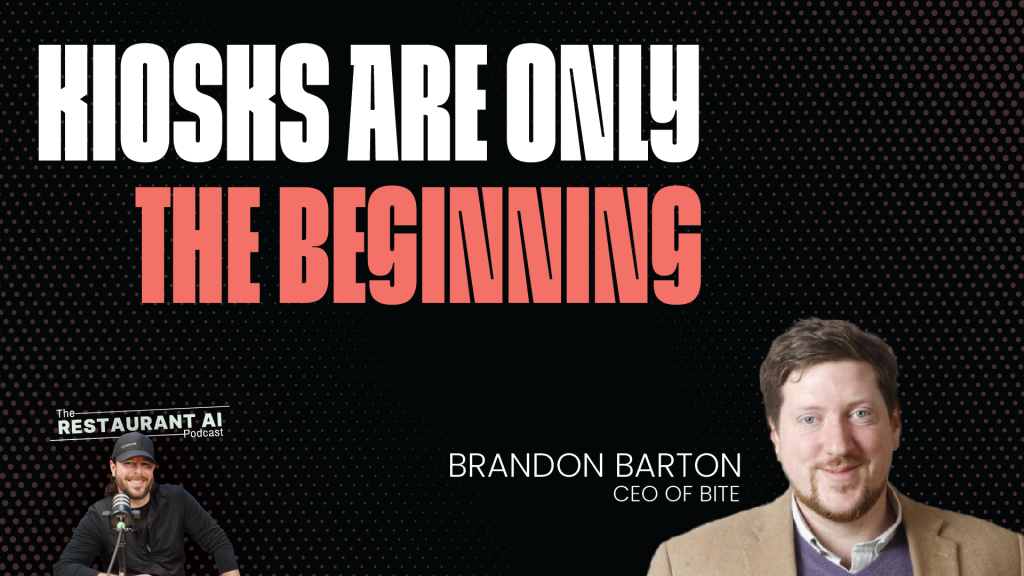
In this episode of the Restaurant AI Podcast, Matt Wampler, CEO and Co-Founder of ClearCOGS, sits down with Brandon Barton, CEO of Bite, to explore how kiosk ordering, AI, and deep restaurant experience are shaping the future of guest interactions.
Brandon shares his 25-year journey from bussing tables in Brooklyn to running the dining room at a Danny Meyer restaurant, making the leap to restaurant tech at Averro, and eventually leading Bite—a software company bringing “e-commerce on a touchscreen” into restaurants nationwide. He explains why Bite focuses on software over hardware, how kiosk ordering can be as (or more) hospitable than face-to-face, and why technology should be an additive part of the guest experience, not a replacement for it. They dive into how AI-driven recommendations can adapt in real time to weather, regional trends, and guest behavior, the concept of “unified guest identification,” and why hospitality at scale often comes down to simple gestures—like giving away fries when you don’t have to. Brandon also shares his perspective on the fractured state of restaurant technology, why costs dropping will lead to more niche players (not fewer), and the importance of working with tech leaders who have restaurant roots.
From hands-on stories about catching escaped roosters to forward-looking ideas about AI agents and data co-ops, this conversation blends humor, operational wisdom, and a candid look at the next wave of restaurant technology.
Topic Time Stamps
00:00 Intro 02:25 Welcome Brandon Barton 03:03 Understanding the business of kiosks in restaurants 7:00 Why kiosks work for an ordering experience 10:55 Point of sale in 2025 14:46 Technology renaissance in the restaurant industry 19:13 Brandon’s background in technology 23:13 Remaining a restaurant person despite a pivot to technology 27:16 Brandon’s calling is to help restaurants embrace technology 29:50 The future of ordering and the guest experience 37:26 The psychology of kiosk ordering 40:05 Using AI to help you order 41:13 The future of the restaurant technology industry 44:34 Restaurant brands building technology 47:15 Ex-restaurant people make better technology 49:07 Relationship between technology and restaurants 52:33 What Bite is doing with AI today 55:40 Learning about how people order 57:25 The best conversations about kiosks 58:40 Advice for choosing technology 1:01:08 Best curated customer experience 1:01:30 Favorite wine 1:01:33 Favorite LLM 1:02:06 Advice for restaurant technology companies 1:02:27 The future for Bite 1:02:44 Outro